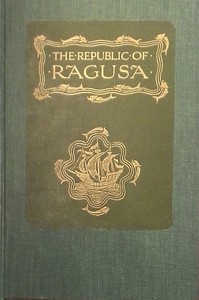
The Republic of Ragusa: An Episode of the Turkish Conquest Book Summary
Introduction
Welcome to this summary of 'The Republic of Ragusa: An Episode of the Turkish Conquest' by Arnold J. Toynbee. This book offers a fascinating glimpse into a unique European state that managed to survive and even thrive under the shadow of Ottoman Turkish power. Situated in the narrow Balkan strip between the Adriatic Sea and the Dalmatian coast, the Republic of Ragusa (modern-day Dubrovnik) became a remarkable example of resilience and adaptation in a turbulent historical period. Toynbee, a renowned historian, guides us through the complex interplay of politics, religion, and trade that allowed this small republic to maintain its independence for centuries, navigating carefully between the powerful empires of Venice, the Ottoman Turks, and the Catholic and Orthodox Christian worlds.
What is this book about?
Arnold J. Toynbee's 'The Republic of Ragusa' focuses specifically on the history of Dubrovnik (Ragusa) from the mid-15th century until the end of the 18th century. The narrative centers on how this coastal city-state, formally known as the Republic of Ragusa, managed to preserve its sovereignty despite being strategically positioned between two major rival powers: the maritime republic of Venice and the expanding Ottoman Empire, as well as being caught between Catholicism and Eastern Orthodoxy.
The book delves into the internal workings of the Ragusan government, its constitution, and its economic system, emphasizing the crucial role of maritime trade and banking. It explores the Republic's famous policy of 'equalitas omnium' (equality for all), which granted citizenship and rights to people of different ethnicities and religions (Catholics, Orthodox, Jews, Muslims) as long as they accepted Ragusan citizenship. This policy fostered a diverse, cosmopolitan society and a thriving trade network connecting the East and West. Toynbee meticulously documents the Republic's successes and failures in diplomacy, its struggles against external pressures, and its eventual decline and absorption into the Austrian Empire in 1808.
Key Lessons
One central lesson from Toynbee's work is the power of strategic self-interest and pragmatism in international relations. The Republic of Ragusa masterfully navigated the treacherous waters of European and Ottoman politics by prioritizing its own economic prosperity and security. It did not succumb to ideological purity but instead pursued an 'equilibrium of power' by playing the major powers (Venice, the Ottomans, Austria) against each other. Ragusa's survival hinged on its ability to maintain the status quo, avoiding large-scale alliances that could drag it into destructive wars. This required a constant, subtle balancing act, using its wealth generated from trade as a tool for diplomacy and self-preservation.
Another crucial lesson is the value of diversity and tolerance as engines of prosperity and stability. Ragusa's constitution, the Charter of Justice (1444), enshrined the principle of 'equalitas omnium' for its citizens. This fostered a highly cosmopolitan society where different religious and ethnic groups coexisted, contributed to the economy, and enriched the city's culture. This policy directly contrasted with the often exclusionary practices of its neighbors and proved to be a significant factor in its resilience and adaptability. It demonstrates that inclusive governance can be more effective and sustainable than exclusionary policies.
The book also teaches about geopolitics and geography. Ragusa's unique location between two major empires made it inherently vulnerable but also strategically indispensable. Its survival depended on controlling access to key trade routes and leveraging its natural defenses (the narrowland position between mainland and islands). This underscores how geography shapes the fate of states and how small states can sometimes wield disproportionate influence due to their strategic location.
Furthermore, Toynbee highlights the importance of adaptability and incremental reform. Rather than attempting grand, risky changes, Ragusa often relied on careful adjustments and maintaining a strong central administration. It adapted its constitution and alliances over time to meet changing circumstances without fundamentally compromising its system or its unique balance of power. This shows that sustainable success often lies in steady, prudent management rather than revolutionary change.
Is this book fit for me?
This book is ideal for:
- Readers interested in medieval and early modern European history, particularly the Balkans and Adriatic region.
- Those fascinated by the history of city-states and small states navigating between larger powers.
- Individuals drawn to stories of resilience, survival, and unique political systems.
- History buffs who enjoy detailed accounts of diplomacy, trade, and daily life in the past.
- Readers who appreciate themes of tolerance, diversity, and the challenges of multicultural societies, even in their historical contexts.
- Students of international relations looking for historical examples of balancing power and maintaining neutrality.
Does it still matter today?
Yes, absolutely. The Republic of Ragusa remains relevant because its story provides valuable historical insights into many contemporary issues. The lessons about strategic self-interest, the delicate balance of power, and the successes and challenges of multi-ethnic, multi-religious coexistence are still pertinent in our globalized and often conflict-prone world. Ragusa's experience demonstrates both the potential benefits and inherent difficulties of such integration. Its survival strategies offer a historical perspective on how small entities can navigate the complexities of international relations and large state systems. The book also serves as a reminder of the consequences of exclusionary policies and the potential contributions of diverse societies.
| Reading on Gutenburg | Free reading |
| Get Paperback Version on Amazon | Buy a book |
| Suggest Book : The Family: A World History Book | Get on Amazon |
Conclusion
Arnold J. Toynbee's 'The Republic of Ragusa' is more than just a historical account; it's a compelling narrative of endurance and ingenuity. Through the lens of this unique Adriatic republic, Toynbee illuminates broader themes of European expansion, Ottoman power, trade, and governance. The Republic of Ragusa stands as a testament to the possibility of survival and prosperity through careful diplomacy, tolerance, and strategic adaptation in a volatile world. It offers valuable lessons in resilience and the complex interplay between local autonomy and global forces, making it a rewarding read for anyone interested in understanding how small states and diverse societies have navigated the challenges of history. The story of Ragusa remains a fascinating and enduring one.