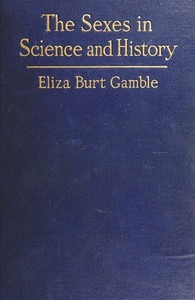
The Sexes in Science and History An inquiry into the dogma of woman's inferiority to man Book Summary
The Sexes in Science and History: An Inquiry into the Dogma of Woman's Inferiority to Man by Eliza Burt Gamble is a pioneering work that challenges the prevailing notions of gender roles and the supposed inferiority of women in the late 19th and early 20th centuries. Gamble, a prominent feminist and social critic, delves into the realms of science, history, and anthropology to dismantle the entrenched beliefs that have long justified the subjugation of women. Through a meticulous examination of evolutionary theory, cultural practices, and historical records, Gamble presents a compelling argument for the intellectual and social equality of the sexes, advocating for a reevaluation of the roles and contributions of women in society.
This book critically examines the dogma of woman's inferiority to man, exploring the scientific, historical, and social underpinnings of this belief. Gamble challenges the assumptions and biases that have historically relegated women to subordinate roles, using evidence from various disciplines to argue that women are not inherently inferior to men. She discusses the implications of evolutionary theory, the role of women in early human societies, and the impact of cultural and religious practices on gender relations. The book is a comprehensive critique of the patriarchal structures that have shaped society, advocating for gender equality and the recognition of women's contributions to human progress.
- Reevaluation of Evolutionary Theory: Gamble argues that the application of Darwinian principles to gender roles is flawed. She contends that the survival of the fittest does not necessarily mean the survival of the most aggressive or dominant, but rather those best adapted to their environment. Women, with their nurturing and cooperative traits, have played a crucial role in human evolution and societal development.
- Historical Contributions of Women: The book highlights the significant contributions of women throughout history, often overlooked or minimized by male-dominated narratives. Gamble provides examples of women in leadership roles, as warriors, and as key figures in cultural and scientific advancements, challenging the notion that women have always been passive or subordinate.
- Cultural and Religious Influences: Gamble explores how cultural and religious practices have reinforced gender inequalities. She critiques the patriarchal interpretations of religious texts and the ways in which these have been used to justify the subordination of women. The book calls for a reexamination of these interpretations to promote gender equality.
- Advocacy for Gender Equality: The overarching theme of the book is a call for gender equality. Gamble argues that both sexes have unique strengths and that society benefits from the full participation of women in all spheres of life. She advocates for educational and professional opportunities for women, as well as a reevaluation of societal attitudes towards gender roles.
This book is fit for readers interested in the history of feminist thought, gender studies, and the critique of patriarchal structures. It is particularly relevant for those seeking to understand the historical and scientific arguments used to justify gender inequality and the counterarguments presented by early feminists like Eliza Burt Gamble. The book is also suitable for readers interested in the intersection of science, history, and social justice.
Yes, the themes and arguments presented in this book are still relevant today. While significant progress has been made in gender equality, many of the issues Gamble addresses, such as the underrepresentation of women in leadership roles, the gender pay gap, and societal expectations around gender roles, persist. The book provides valuable historical context and a foundation for understanding contemporary debates on gender equality.
| Reading on Gutenburg | Free reading |
| Get Paperback Version on Amazon | Buy a book |
| Suggest Book : The Second Sex by Simone de Beauvoir Book | Get on Amazon |
In conclusion, The Sexes in Science and History by Eliza Burt Gamble is a seminal work that challenges the dogma of woman's inferiority to man. Through a rigorous examination of scientific, historical, and cultural evidence, Gamble makes a compelling case for gender equality. Her arguments remain relevant today, offering valuable insights into the ongoing struggle for gender parity. Readers interested in deepening their understanding of feminist thought and the historical roots of gender inequality will find this book enlightening and thought-provoking.