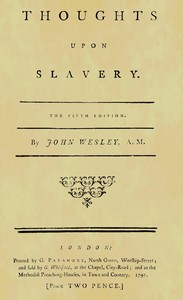
Thoughts upon slavery Book Summary
The Importance of Individual Conscience: Woolman’s central argument revolves around the idea that slavery is fundamentally wrong, and that each individual has a moral obligation to recognize this and act accordingly. He doesn’t rely on legal arguments or economic theories, but appeals directly to the reader’s sense of what is right and just. He constantly questions his own motives and actions, demonstrating a rigorous self-examination that he encourages in others. For example, he details his internal struggle over accepting a small payment for a job, realizing that even seemingly harmless economic interactions could be built on the exploitation of enslaved labor.
The Complicity of Beneficiaries: A crucial aspect of Woolman’s argument is that simply *not owning* slaves doesn’t absolve someone of guilt. He argues that anyone who benefits from slave labor—by purchasing goods produced by slaves, or by participating in a society structured around slavery—is complicit in the injustice. He painstakingly outlines how seemingly respectable trades, like tailoring and carpentry, relied on cotton and other products cultivated by enslaved people. This idea challenges the notion that one can remain neutral in the face of oppression and forces readers to consider their own level of involvement in unjust systems.
A Gradual, Persuasive Approach to Change: Woolman wasn’t a firebrand orator. He believed in the power of gentle persuasion and reasoned argument. He spent years patiently engaging in dialogue with slaveholders, seeking to awaken their consciences rather than shaming or condemning them. He understood that changing deeply ingrained attitudes and practices takes time and requires a willingness to listen and understand. His approach, documented throughout the book, offers a compelling model for social reform that prioritizes empathy and understanding over confrontation.
The Spiritual Harm of Slavery: Woolman consistently frames slavery as a spiritual disease, corrupting both the enslaved and the enslaver. He argues that participating in slavery violates the principles of Christian love and equality, and that it creates a barrier between individuals and God. He emphasizes the importance of living a life of simplicity and integrity, free from the stain of oppression. This spiritual dimension adds a unique and powerful layer to his anti-slavery argument, appealing to the religious sensibilities of his audience.
- You are interested in the history of the abolitionist movement in America.
- You appreciate thoughtful, morally driven writing.
- You are interested in the intersection of faith and social justice.
- You enjoy reading primary sources and gaining insight into the perspectives of individuals from the past.
- You are looking for a book that challenges your assumptions about complicity and responsibility.
| Reading on Gutenburg | Free reading |
| Get Paperback Version on Amazon | Buy a book |
| Suggest Book : The New Jim Crow Book | Get on Amazon |