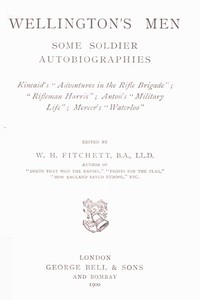
Wellington's Men: Some Soldier Autobiographies Book Summary
"Wellington's Men: Some Soldier Autobiographies" offers readers a unique, raw, and unfiltered glimpse into the lives of ordinary soldiers who served under the renowned British military leader, the Duke of Wellington, during the Napoleonic Wars. Instead of focusing on Wellington himself, this collection centers on the personal narratives, letters, and sketches written by the common soldiers and officers who fought alongside him. It presents a mosaic of experiences, revealing the humanity, fears, hopes, and daily realities of those who inhabited the world of war through one of history's most famous commanders.
The book compiles autobiographical accounts, primarily from the 19th century, written by soldiers who fought in Wellington's army. These accounts range from formal autobiographies to informal letters and diary entries, offering personal perspectives on campaigns, battles, camp life, relationships, and the psychological toll of war. It aims to move beyond the mythic portrayal of Wellington and the elite armies of the time, presenting a more grounded, diverse, and sometimes contradictory picture of the people who made up his force. The collection highlights individual stories of bravery, endurance, disillusionment, and survival against the backdrop of major European conflicts, providing a vivid social and military history from the ground level.
This book offers several profound insights into leadership, society, and the human condition:
Firstly, it shatters the often-romanticized image of soldiers in elite armies. Reading these firsthand accounts reveals soldiers grappling with fear, boredom, poverty, and the harsh realities of combat, alongside moments of camaraderie and individual heroism. They are not just cannon fodder, but complex individuals with their own motivations, fears, and personalities, whose experiences directly shaped the outcome of battles.
Secondly, it provides invaluable lessons in leadership from the perspective of the led. Wellington is often lauded as a master strategist, but these narratives show us the men who followed him. They reveal the importance of morale, clear communication, discipline (and its limits), and the human cost of strategic decisions. Understanding how soldiers perceived their commander and their mission adds crucial layers to historical analysis.
Thirdly, the collection demonstrates the power of personal narrative in history. These are not polished histories; they are raw recollections, sometimes embellished, sometimes mistaken, but always offering unique, intimate perspectives unavailable in official records. This teaches us about historical memory, the nature of testimony, and the ways individuals make sense of their past experiences.
Finally, it implicitly teaches about adaptation and resilience. Many soldiers faced unimaginable hardships, from disease and injury to the constant threat of death. Their accounts show remarkable endurance and the ability to find meaning and connection amidst chaos, offering timeless reflections on coping with adversity and the bonds formed under extreme pressure.
This book is particularly fitting for:
* **History Buffs:** Especially those interested in the Napoleonic Wars, British military history, or the social history of the 19th century.
* **Students of Military Leadership:** Seeking to understand leadership dynamics from the perspective of the troops, moving beyond strategic analyses.
* **Fans of Oral History:** Readers who appreciate hearing directly from historical figures and want to understand events through personal experience and emotion.
* **Anyone curious about 'What it was really like':** Those who want to move beyond sanitized versions of war and get a sense of the gritty, human reality faced by ordinary people during times of conflict.
Yes, the themes explored in "Wellington's Men" absolutely still matter today. The questions of leadership, the human experience of conflict, the impact of war on ordinary people, the nature of courage and fear, and the importance of diverse perspectives are timeless. Understanding the past helps us navigate the present and anticipate the future.
**Suggested Next Book:** "The Long, Striking, and Bloody War: The American Civil War as Experienced by the Soldiers Who Fought It" by J. David Hacker. This book offers a similar approach, compiling numerous first-hand accounts from soldiers on both sides of the American Civil War. Like "Wellington's Men," it provides a powerful, ground-level perspective on a defining conflict, focusing on the individual experiences that shaped the war, making it a natural progression for readers interested in the human dimension of warfare.
| Reading on Gutenburg | Free reading |
| Get Paperback Version on Amazon | Buy a book |
| Suggest Book : Winter's War: The Untold Story of Hitler's Invasion and the Birth of Modern Germany Book | Get on Amazon |
"Wellington's Men" is a compelling collection that transforms our understanding of a pivotal historical period and the people involved. By listening to the voices of the soldiers themselves, it strips away the layers of myth and officialdom, offering a vivid, often poignant, portrayal of life in Wellington's army. It serves as a powerful reminder of the human cost and complexity of war, providing valuable insights into leadership, historical perspective, and the enduring power of personal narrative. For anyone seeking a more intimate and multifaceted view of the Napoleonic era, this book is an essential and illuminating read.