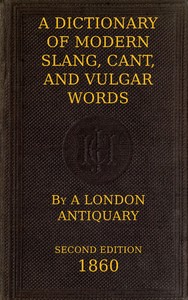
A Dictionary of Slang, Cant, and Vulgar Words Used at the Present Day in the Streets of London; the Universities of Oxford and Cambridge; the Houses of Parliament; the Dens of St. Giles; and the Palaces of St. James. Book Summary
This book, A Dictionary of Slang, Cant, and Vulgar Words Used at the Present Day in the Streets of London; the Universities of Oxford and Cambridge; the Houses of Parliament; the Dens of St. Giles; and the Palaces of St. James, is a fascinating compilation of the informal and colloquial language used in various strata of British society during the 19th century. It offers a unique glimpse into the vernacular of the time, capturing the colorful expressions and slang that were prevalent in both high and low social circles.
This book is a comprehensive dictionary that documents the slang, cant, and vulgar words used in London and other parts of England during the 19th century. It covers a wide range of social settings, from the streets and dens of St. Giles to the prestigious universities of Oxford and Cambridge, and even the Houses of Parliament and the palaces of St. James. The dictionary provides definitions and examples of usage for terms that were considered informal, vulgar, or part of the underworld lexicon at the time.
- Richness of Historical Slang: The book reveals the diversity and creativity of slang terms used in the 19th century, offering insights into the social and cultural contexts of the time. For example, terms like "crib" (a house) and "duds" (clothes) were commonly used in the streets of London.
- Social Stratification: The dictionary highlights the differences in language use across social classes. The slang used in the "Dens of St. Giles" (a notorious slum) contrasts sharply with the more refined language of the "Palaces of St. James," illustrating the social divides of the era.
- Evolution of Language: Many of the terms in the dictionary have evolved or fallen out of use, demonstrating how language changes over time. For instance, "buncombe" (nonsense) has largely disappeared, while "bloke" (man) remains in use today.
- Cultural Insights: The book provides a window into the daily lives and attitudes of people from different walks of life. Terms related to crime, sex, and money reflect the preoccupations and concerns of the time.
This book is ideal for:
- Historians and linguists interested in the evolution of English slang.
- Writers and researchers seeking authentic period language for their work.
- Anyone curious about the colorful and often humorous expressions used in 19th-century England.
- Readers who enjoy exploring the informal and sometimes risqué aspects of language.
Yes, this book still matters today. While some of the slang terms are obsolete, many have persisted or evolved into modern usage. The book provides valuable historical context and is a fascinating resource for understanding the linguistic heritage of English. It also serves as a reminder of the dynamic and ever-changing nature of language.
For readers interested in exploring similar themes in a more contemporary context, I recommend The Vulgar Tongue: Green's History of Slang by Jonathon Green. This book traces the history of English slang from the 16th century to the present day, offering a comprehensive and up-to-date perspective on the subject.
| Reading on Gutenburg | Free reading |
| Get Paperback Version on Amazon | Buy a book |
| Suggest Book : The Vulgar Tongue: Green's History of Slang Book | Get on Amazon |
A Dictionary of Slang, Cant, and Vulgar Words is a valuable historical document that captures the vibrant and diverse language of 19th-century England. It offers readers a unique opportunity to explore the informal and often colorful expressions of the time, providing insights into the social and cultural contexts in which they were used. While some terms may be outdated, the book remains a fascinating resource for linguists, historians, and anyone interested in the rich tapestry of the English language.