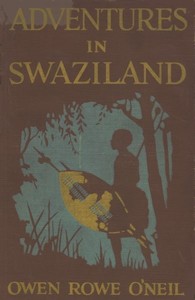
Adventures in Swaziland: The Story of a South African Boer Book Summary
Adventures in Swaziland
"Adventures in Swaziland: The Story of a South African Boer" is a classic travelogue written by George Agnew Black. Published in the early 20th century, it chronicles his experiences living among the Boer settlers in what was then known as Swaziland (now Eswatini). The book offers a fascinating glimpse into the lives of these South African descendants, their culture, challenges, and their relationship with the local Swazi people.
Book Summary
This book is primarily a first-hand account and detailed exploration of the lives of Boer settlers in the Transvaal region of South Africa, specifically focusing on their settlement in Swaziland. It delves into the daily life, agricultural practices, economic activities, social structures, and political aspirations of these communities. Black, who himself was born in the area (then part of the Cape Colony), provides observations on their relationship with the indigenous populations and the environment they inhabited. It serves as both a travel narrative and a historical snapshot of a particular period and community.
Key Insights and Lessons
The book offers several valuable perspectives, though from a historical context:
1. Cultural Adaptation and Integration: The book explores how the Boers, descendants of Dutch settlers, adapted to the new environment and society of Swaziland while retaining certain aspects of their own cultural identity. It highlights the complex dynamics of integration and the challenges faced in bridging different cultural worlds. For example, observing their attempts to replicate aspects of Boer farm life in a different geographical and social setting illustrates the adaptability and selective preservation of cultural practices.
2. Resilience and Self-Reliance: The narrative often emphasizes the Boers' independent spirit, their skills in agriculture and resource management, and their ability to build and sustain their own communities in a challenging environment. This focus on self-sufficiency and resilience in the face of external pressures (like colonial rule) offers a historical lesson on community building and resourcefulness.
3. Understanding Complex Social Dynamics: Black provides insights into the intricate relationships between the Boer settlers and the local Swazi population. While potentially reflecting a white European perspective, the book allows readers to understand the social structures, economic interactions, and potential tensions or alliances that existed between these groups during that era.
4. Historical Perspective on Land and Settlement: It serves as a valuable primary source for understanding the history of land occupation, settlement patterns, and the socio-economic development of the region during the early 20th century, specifically from the viewpoint of the Boer settlers who were a significant presence.
Is This Book Fit for You?
If you are interested in:
- Historical accounts of early 20th-century Southern Africa.
- Travel writing and first-hand narratives.
- The history and culture of Boer communities.
- Life in what is now Eswatini during a specific historical period.
- Cultural exchange and interaction in colonial contexts.
Then this book could be a valuable read. It offers a unique perspective that might not be covered in more conventional histories. However, be aware that it is written from a specific (white European-descended) viewpoint and reflects the historical context.
Does It Still Matter Today?
Yes, this book still holds relevance today, primarily as a historical document and for understanding past social dynamics. It provides invaluable primary source material for historians and researchers studying the region's past. It helps us understand the roots of certain social structures, land ownership patterns, and cultural identities in Southern Africa. Furthermore, it offers insights into themes of migration, settlement, cultural adaptation, and the long-term impacts of historical relationships between different groups. Understanding this past is crucial for comprehending the present complexities of the region.
| Reading on Gutenburg | Free reading |
| Get Paperback Version on Amazon | Buy a book |
| Suggest Book : The Art of Impossible: The Missing Formula to Breakthrough Success Book | Get on Amazon |
Conclusion
"Adventures in Swaziland" remains a significant piece of historical literature, offering a unique window into a specific time and place. While its direct relevance might be historical, its value for researchers, history enthusiasts, and anyone seeking to understand the complex tapestry of Southern African history lies in its authentic, on-the-ground perspective. It serves as a reminder of the diverse experiences that shaped the continent. If you seek a modern exploration of resilience and overcoming obstacles, consider reading "The Art of Impossible".