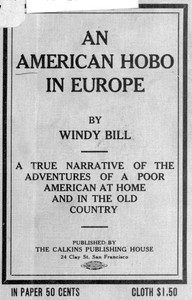
An American Hobo in Europe A True Narrative of the Adventures of a Poor American at Home and in the Old Country Book Summary
Lessons from 'An American Hobo in Europe'
The book offers several profound insights, primarily stemming from the unique vantage point of the homeless observer:
1. The Power of Outsider Perspective: By being essentially invisible and without stake in conventional society, the narrator gains a unique ability to observe and report on European life without the filters of tourism or expatriate experience. He notices the mundane, the overlooked, and the sometimes unpleasant aspects of daily life in a way that someone with more comfort might miss. For example, his observations of people waiting for trains, the conditions in different cities, or the interactions of strangers reveal a texture of European society that official guides often omit.
2. Resilience and Adaptability in Adversity: The book is a testament to human survival and ingenuity. The narrator demonstrates remarkable resilience in dealing with poverty, homelessness, and the constant challenge of finding food, shelter, and transportation. His ability to adapt to different countries, languages, and situations, often relying on resourcefulness and common sense, highlights a fundamental human capacity to cope with hardship. His journey is as much about surviving as it is about traveling.
3. Social Commentary Through Unconventional Lenses: The narrator implicitly and explicitly comments on social issues prevalent in Europe (and America) such as class distinctions, the gap between wealth and poverty, government policies (like welfare systems), and the superficiality of tourist attractions. His perspective, shaped by necessity and constant exposure to the 'real' conditions of life, provides a critical, often understated, commentary on contemporary society.
4. Finding Humanity in Unexpected Places: Despite the hardships faced by the narrator, the book contains numerous instances of unexpected kindness and human connection. He encounters generosity from strangers, finds moments of shared humanity in unlikely encounters, and discovers that even in poverty, compassion and community can exist. These moments offer a counterpoint to the often isolating nature of homelessness.
Who Should Read This Book?
- Fans of travel writing and memoirs that offer unique perspectives.
- Those interested in social history, poverty, and homelessness issues.
- Individuals curious about European life beyond the typical tourist experience.
- Readers who appreciate gritty, realistic narratives over idealized adventures.
- People interested in human resilience and adaptation.
Yes, the book certainly still matters today.
Its exploration of poverty, homelessness, and social inequality remains a pressing global issue. The themes of finding humanity in difficult circumstances, navigating unfamiliar cultures without resources, and the critical gaze towards societal structures are timeless. While the specific technology (trains, perhaps the internet) might change, the fundamental human experiences of struggle, survival, and seeking connection in a sometimes uncaring world are constant. The book serves as a stark reminder of the realities faced by those on the margins of society and the resilience required to face them.
| Reading on Gutenburg | Free reading |
| Get Paperback Version on Amazon | Buy a book |
| Suggest Book : The Road Book | Get on Amazon |
In conclusion, 'An American Hobo in Europe' is a compelling and thought-provoking memoir that offers a rare, eye-opening perspective on European life through the lens of homelessness and poverty. It's a raw, honest, and often unsettling account that challenges readers' assumptions about society, wealth, and the human condition. While its hardships might be difficult to read for some, its insights into resilience, observation, and the search for connection are invaluable and remain relevant in our modern world.