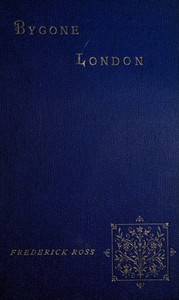
Bygone London Book Summary
Introduction
"Bygone London" is a collection of essays published in 1904, offering a nostalgic gaze into the past, capturing the character, customs, and landscapes of the city during the late Victorian and Edwardian eras. Authored by various contributors, the book provides a vivid snapshot of a London that would soon undergo massive transformations with the dawn of the 20th century.
What is this book about?
This book delves into the 'bygone' aspects of London's past, focusing on the period before major 20th-century changes. It explores the city's streets, buildings, social habits, and the daily lives of its inhabitants during a time when London was still retaining much of its medieval and Georgian charm, before the great waves of suburbanization and modernization fully reshaped it.
Through various essays, the book paints pictures of familiar (and unfamiliar) London scenes: the bustling markets of Smithfield, the grandeur of the Crystal Palace (before its destruction), the social customs of the upper classes, the working conditions in the East End, the characteristics of different London suburbs, and the unique atmosphere of the city's bridges and parks. It's less an academic history and more a collection of evocative memories and observations.
Key Lessons
The book offers several key insights, primarily through its nostalgic lens:
London's Transformative Nature: "Bygone London" serves as a powerful reminder of how cities change over time. It contrasts the pre-automotive, pre-outer-suburban landscapes with the familiar modern city. Reading it feels like stepping back, seeing London as a place where central areas were perhaps less congested by cars, suburbs were more distinct and spread out, and certain architectural styles were more prevalent or even dominant. For instance, the detailed descriptions of narrow alleyways, old inns, and specific types of housing (like the 'back-to-back' houses in the East End) highlight a built environment that has largely disappeared.
The Loss of Certain 'Characters': The book captures a specific 'character' of London that many feel is lost. This includes not just physical changes but shifts in social life, community ties, and perhaps even the 'politeness' or manners of the time, as described by contemporary accounts. The loss of traditional markets, specific trades, and the way people moved through the city are highlighted, making one reflect on the intangible aspects of urban life that change along with the physical landscape.
The Value of Nostalgia as Historical Insight: While inherently nostalgic (as its title suggests), the book provides valuable, on-the-ground perspective. The personal observations and anecdotes offer a human touch to history, complementing dry factual accounts. It helps readers understand how people lived, what they valued, and what their city meant to them during that particular period, making history feel more immediate and relatable.
Social Divide and Urban Inequality: Several essays implicitly or explicitly address the stark contrasts between rich and poor in late Victorian London. Descriptions of the East End or areas like Whitechapel reveal the harsh living conditions faced by many, juxtaposed with the opulent lives of the wealthy. This enduring theme underscores that change often affects different social strata differently.
Is this book fit for me?
If you are interested in:
- The history of London, particularly the transition from the 19th to the early 20th century.
- The 'Golden Age' of London as depicted by contemporary observers.
- The changing nature of cities and what gets lost in urban development.
- Victorian and Edwardian social history.
- Engaging with historical accounts written in a more anecdotal and evocative style.
You will find "Bygone London" valuable. It's a gentle, nostalgic journey through a specific slice of time and place. However, be aware that it's not a comprehensive academic history; it's a collection of snapshots offering a particular, often sentimentalized, view. It might feel dated to modern readers due to its focus on pre-modern London, but its charm lies in that very perspective.
Does it still matter today?
Absolutely. "Bygone London" remains relevant for several reasons:
First, it serves as a poignant reminder of how much London (and cities in general) have changed. The book prompts reflection on what aspects of our own cities we take for granted and what might be lost in future development. The contrast between the past descriptions and the current bustling, globalized metropolis is striking.
Second, it deals with universal themes of urbanization, social change, and the relationship between people and their environment. The challenges of preserving history versus embracing progress, the social divides within cities, and the nostalgia for simpler (or different) times are still pertinent issues.
Third, it offers a unique, human perspective on history. Reading these accounts can be deeply atmospheric and help modern readers connect with the past in a more visceral way.
| Reading on Gutenburg | Free reading |
| Get Paperback Version on Amazon | Buy a book |
| Suggest Book : London: The Biography Book | Get on Amazon |
Conclusion
"Bygone London" is a charming and evocative collection of essays that transports the reader to a different era of the capital. While inherently nostalgic and lacking the comprehensive depth of a modern academic study, it offers a unique, personal glimpse into Victorian and Edwardian London. Its value lies in its atmospheric descriptions and its powerful commentary on the relentless pace of urban change. It serves as a valuable historical and cultural touchstone, reminding us of the 'bygone' worlds that shaped the city we know today and prompting reflection on the nature of progress and memory in our own time. For those seeking a deeper, more detailed exploration of London's long history, further reading is recommended.