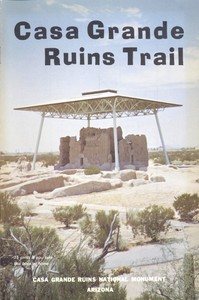
Casa Grande Ruins Trail Book Summary
Introduction
Casa Grande Ruins Trail is a captivating work by F. W. Kelsey, first published in 1930. It offers readers a unique blend of travelogue, anthropological observation, and historical speculation, centered around a remarkable journey through the remote, arid landscapes of the American Southwest, specifically focusing on the ruin of a large, ancient Hohokam pueblo called Casa Grande near present-day Phoenix, Arizona.
What is this book about?
The book chronicles a journey undertaken by Kelsey and his wife, Mabel, in the early 20th century. Their primary goal was to visit and study the Casa Grande ruin, a site of immense size and significance left by the Hohokam people who inhabited the region centuries before the arrival of Europeans. The narrative details their challenging trek through the Sonoran Desert, their encounters with the harsh natural environment, the local Tohono O'odham people, and their exploration of the ruin itself.
Beyond the travelogue, Kelsey weaves in his thoughts on anthropology, archaeology, and the interpretation of ancient cultures. He speculates about the lives and motivations of the Hohokam, the reasons for their decline, and reflects on the relationship between past inhabitants and the land they occupied. The book serves as both an adventure story and a thoughtful commentary on understanding history through tangible remains.
Key Lessons and Insights
The book offers several profound insights through its narrative and reflections:
1. The Fragility and Resilience of Human Settlements: Kelsey's exploration of the Casa Grande ruin emphasizes the grandeur of the ancient civilization but also the vulnerability of their structures and way of life. He implicitly suggests how shifts in climate, resource availability, or social dynamics could lead to the decline of even sophisticated cultures, leaving behind only echoes of their former glory. The journey itself, facing the harsh desert environment, mirrors this theme of endurance against adversity.
2. Interpreting the Past Through Material Remains: Kelsey, as an archaeologist and writer, demonstrates the process and challenges of interpreting history from ruins. He doesn't provide definitive answers but offers educated guesses and observations about the Hohokam's building techniques, social organization, and possible beliefs, all based on the physical evidence left behind. This encourages readers to consider how we reconstruct narratives from incomplete and often ambiguous clues.
3. The Living vs. The Ruined Past: A significant part of the book deals with the authors' encounters with the Tohono O'odham people who still inhabit the lands surrounding Casa Grande. This juxtaposition highlights the contrast between a living, contemporary culture and the remnants of a past civilization. Kelsey respects the ongoing presence and connection of the O'odham to the land, suggesting that understanding the past must acknowledge the continuous human story, not just the remnants of one culture.
4. Adventure as Catalyst for Understanding: The physical journey through the desert is not merely a backdrop but an active participant in the learning process. Kelsey uses the challenges, discoveries, and moments of beauty encountered along the trail to deepen his (and the reader's) understanding of the region's history, ecology, and human experience. The act of travel becomes intertwined with intellectual and emotional discovery.
5. Speculation and the Limits of Knowledge: Kelsey openly admits areas where historical questions remain unanswered. He presents multiple hypotheses and acknowledges the limitations of his own knowledge and the archaeological evidence. This honesty about uncertainty encourages a more nuanced view of history than definitive pronouncements.
Is this book fit for me?
This book would be particularly suitable if:
- You are interested in travel literature set in the American Southwest or the history of the region.
- You have a curiosity about ancient American Indian cultures, specifically the Hohokam, or are interested in archaeology and anthropology as fields of study.
- You enjoy narratives that blend adventure, personal reflection, and historical inquiry.
- You appreciate older non-fiction works and are comfortable with a somewhat dated perspective.
- You are interested in themes of human adaptation to harsh environments and the rise and fall of civilizations.
Less likely to appeal if:
- You are looking for cutting-edge archaeology or detailed scientific analysis.
- You prefer fast-paced, thriller-like narratives.
- You are not interested in the history of the American Southwest or desert exploration.
Does it still matter today?
Yes, Casa Grande Ruins Trail remains relevant today. Its exploration of ancient ruins in the desert continues to capture the imagination, reminding us of the long human history of the American Southwest. The book's themes of interpreting history from limited evidence, the relationship between humans and the environment, and the coexistence of past and present cultures in the same landscape are timeless.
It encourages a sense of place and a connection to the deep time that underlies our modern lives, fostering appreciation for both the natural and cultural heritage of the region. Understanding our past, even through a lens like Kelsey's that reflects its own biases, helps ground our present and informs our future environmental and cultural stewardship.
| Reading on Gutenburg | Free reading |
| Get Paperback Version on Amazon | Buy a book |
| Suggest Book : The True History of America Book | Get on Amazon |
Conclusion
In summary, Casa Grande Ruins Trail is a classic, engaging piece of early 20th-century exploration literature. While perhaps lacking the modern academic rigor expected today, it offers a vivid, personal account of discovering an ancient civilization's remnants in the stark beauty of the desert. It is a valuable read for anyone interested in the history of the American Southwest, the practice of archaeology, or simply a well-told story of adventure and discovery. It stands as a testament to the enduring fascination with the past and the places where it is preserved. Tags : Archaeology History - American Travel & Geography