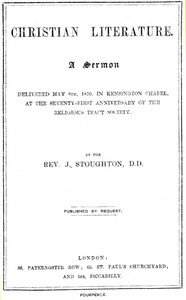
Christian Literature a sermon delivered May 8th, 1870, in Kensington Chapel, at the seventy-first anniversary of the Religious Tract Society Book Summary
A Sermon on Christian Literature
On May 8th, 1870, at the seventy-first anniversary of the Religious Tract Society in Kensington Chapel, the renowned Baptist preacher Charles Spurgeon delivered a sermon titled 'Christian Literature.' This address, drawn from the resources of the Religious Tract Society and available through Project Gutenberg, offers timeless insights into the role and importance of reading within the Christian faith. Spurgeon, known for his powerful oratory and deep commitment to the Word of God, uses this occasion to reflect on the nature, purpose, and value of literature specifically for believers.
The Core of the Sermon
This sermon by Charles Spurgeon is fundamentally an exhortation to the diligent use of Christian literature. He addresses his congregation, likely including members of the Religious Tract Society, on the significance of reading books that are spiritually profitable. Spurgeon emphasizes that while many books exist, not all are beneficial or suitable for Christians. He explores the purpose of Christian literature—primarily as a means of nourishing the soul, deepening understanding of God's Word, and fostering spiritual growth. The sermon likely touches upon the criteria for selecting good Christian literature and the responsibility that comes with reading it.
Key Insights from the Sermon
Spurgeon's sermon delves into several crucial aspects of Christian reading:
1. **The Necessity of Diligent Reading:** Spurgeon argues strongly that simply knowing the Bible is not enough. He asserts that one must engage actively with the Bible, reading it repeatedly, meditating on it, and applying its principles to daily life. He uses vivid metaphors, comparing the neglect of diligent Bible study to spiritual neglect or even spiritual adultery—a betrayal against the love shown by Christ. He might use a biblical example, perhaps referencing the Bereans who examined the Scriptures daily (Acts 17:11), to illustrate the point.
2. **The Value of Christian Literature as a Supplement:** While affirming the centrality of the Bible, Spurgeon highlights the role of other Christian books. He explains that the Bible, being the foundation, can be supplemented by other writings that help clarify its teachings, apply its truths to specific situations, or provide edifying examples from history or experience. He emphasizes that the best Christian literature serves as a commentary on Scripture or an application of its truths, acting like a helpful guide accompanying the main text.
3. **Discernment in Choosing Books:** Spurgeon warns against the proliferation of books and the danger of reading indiscriminately. He calls for discernment, urging believers to be careful about the literature they consume. He might caution against books that contradict Scripture, promote worldly values, or lack spiritual depth. He likely advocates for reading books recommended by godly individuals, those published by reputable Christian presses (like the Religious Tract Society itself), and those whose authors demonstrate a clear reliance on God and sound doctrine.
4. **The Active Application of Reading:** Reading is presented not as a passive activity but as a means to an end – spiritual transformation. Spurgeon stresses that reading alone is insufficient; the goal is to internalize the truth and allow it to change one's life, character, and conduct. He encourages readers to pray for understanding, to discuss what they've read with fellow believers, and to seek opportunities to practice the lessons learned.
Who Would Benefit?
This sermon is highly fitting for:
* **Individuals committed to Spiritual Growth:** Those who take their faith seriously and seek ways to deepen their understanding and application of God's Word through reading.
* **Believers Seeking Discernment:** Christians who are looking for guidance on how to choose books that are spiritually edifying and beneficial.
* **Members of Religious Organizations:** Particularly those involved in publishing or promoting Christian literature, as Spurgeon addresses the responsibility that comes with producing and consuming such materials.
* **Those Historically Interested in Victorian Christianity:** Readers wanting to understand the spiritual concerns and practices of 19th-century evangelical Christianity, as delivered by a prominent preacher of the era.
* **Modern Readers Seeking Foundational Truths:** The core message about the necessity of diligent Bible reading and the dangers of careless consumption of information remains relevant. However, readers expecting a detailed analysis of specific books or a modern approach to Christian publishing might find some aspects dated.
Enduring Relevance?
Yes, this sermon retains significant relevance today, despite being nearly 150 years old. The fundamental truths Spurgeon addresses—the absolute necessity of diligent Bible reading, the dangers of neglecting it, and the importance of discernment in choosing spiritual nourishment—remain core Christian disciplines. The challenges of information overload and the abundance of potentially misleading content online mirror the concerns Spurgeon expressed about the proliferation of books in his time. Therefore, the sermon continues to offer valuable counsel on how to approach reading, especially in the digital age where discernment is arguably even more crucial.
| Reading on Gutenburg | Free reading |
| Get Paperback Version on Amazon | Buy a book |
| Suggest Book : Mere Christianity Book | Get on Amazon |
Final Thoughts
Charles Spurgeon's sermon 'Christian Literature' is a powerful call to arms for the spiritual life. Delivered in the context of the Religious Tract Society, it underscores the vital connection between reading, understanding God's Word, and living a transformed life. Spurgeon champions the Bible as the essential foundation but also recognizes the value of other Christian writings as aids to understanding and application, provided they are approached with caution and a discerning heart. The sermon remains a compelling plea for spiritual diligence and a reminder of the ongoing importance of seeking knowledge and wisdom through the reading of God's Word and the carefully chosen literature that supports it in our journey of faith.