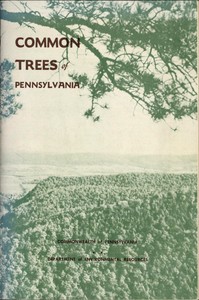
Common trees of Pennsylvania Book Summary
Introduction
This summary covers the book "Common Trees of Pennsylvania" by John H. Chaytor, published by the Pennsylvania Forest Service in 1912. Originally intended as a technical guide for foresters and woodsmen, this resource offers a detailed look at the native and commonly occurring tree species within the state during the early 20th century.
What is This Book About?
"Common Trees of Pennsylvania" is a historical forestry guide published by the state. Its primary aim is to provide practical information about the native trees of Pennsylvania. The book details the identification, distribution, physical characteristics, wood properties, and economic significance of the major tree species found throughout the state. It describes their habitats, growth habits, and uses, particularly focusing on their value for timber production and forest management during the early 1900s.
Key Lessons
While written over a century ago, the book offers valuable insights into the ecology and botany of Pennsylvania's forests from a specific historical period:
Historical Baseline: The book provides a snapshot of the forest composition and distribution in Pennsylvania around 1912. It describes the trees that were considered common or widespread at that time, which may have changed due to factors like logging, agriculture, and urbanization. Reading this book helps understand the historical trajectory of the state's forests.
Practical Identification and Forestry Details: Chaytor's descriptions of tree leaves, bark, twigs, buds, and fruiting bodies were intended to aid in field identification. The book also delves into practical forestry aspects, including site requirements, growth rates, yield tables (estimating the volume of timber per acre), and wood uses (like lumber grades, pulpwood quality, and specific applications like fence posts or railroad ties). This practical knowledge, though dated, reflects the forestry science of its era.
Focus on Native Species: The book exclusively focuses on trees native to Pennsylvania, detailing species like the White Oak, Sugar Maple, White Pine, Black Cherry, and many others common to the region. It emphasizes their natural characteristics and roles within the ecosystem.
Understanding State and Regional Flora: It serves as a foundational reference for understanding the tree species that historically defined Pennsylvania's landscape, even if some species are less common today or have been replaced by others.
Is This Book Fit for Me?
This book will be most beneficial if:
You are interested in Pennsylvania's forest history: You want to understand what the state's forests looked like a century ago and the species that were prevalent then.
You study historical or regional ecology: Researchers might use it as a primary source to track changes in forest composition and distribution over time.
You are a student of forestry or wood identification (historically): It offers detailed descriptions of tree characteristics from a classic field guide perspective.
You need specific historical yield data for Pennsylvania (1912): If you are studying historical forestry practices or comparing past yield estimates with current models, this book contains original data.
However, it may not be ideal if:
You seek up-to-date taxonomy: Scientific names and classifications have evolved since 1912. You want modern ecological insights: Contemporary understanding of tree ecology, conservation, and threats (like invasive species) is not addressed. You are looking for general nature information: This book is dense with technical forestry information.
Does It Still Matter Today?
Yes, "Common Trees of Pennsylvania" still holds value today, primarily as a historical document:
Historical Perspective: It provides crucial baseline data for understanding how Pennsylvania's forests have changed. Comparing the described species distributions and abundances with current forest inventories helps researchers and conservationists understand the impact of human activities and natural processes over the last century.
Educational Resource: It serves as a primary source for courses on Pennsylvania history, historical ecology, or the history of forestry. It demonstrates how scientific fields like forestry evolved.
Foundation for Local Knowledge: While outdated for current taxonomy and management practices, the fundamental knowledge of the major tree species in the state remains relevant. The book helps readers connect common names with the trees they represent, providing a foundation for further study using more modern resources.
However, its outdated information on taxonomy and forestry techniques means it should ideally be supplemented with contemporary resources.
Since the book is historical and focuses on forestry practices of the early 1900s, a newer book providing current information and updated perspectives would be more suitable for modern readers seeking practical, up-to-date knowledge about Pennsylvania's trees.
| Reading on Gutenburg | Free reading |
| Get Paperback Version on Amazon | Buy a book |
| Suggest Book : <div class='container'><div class='card'><div class='card-body'><h5 class='card-title'>Suggest Book</h5><p>For a more modern and comprehensive overview, consider reading "Trees of Pennsylvania" by William C. Mead and David J. Nowak.</p></div></div></div> Book | Get on Amazon |
Conclusion
"Common Trees of Pennsylvania" by John H. Chaytor is a valuable piece of historical literature. While not a contemporary guide for identification or forest management, it offers a unique window into the state's forest composition and forestry practices from the early 1900s. It serves as an essential primary source for understanding historical changes in the region's woodlands and provides foundational knowledge of the native tree species, even if further research is needed for current taxonomy and ecological understanding.