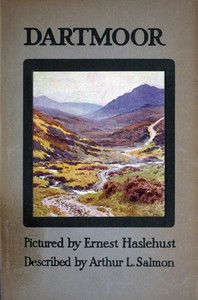
Dartmoor Book Summary
Charles Kingsley’s Dartmoor, published in 1855, isn’t a novel in the traditional sense. It’s a blend of travelogue, natural history, folklore, and social commentary, all woven together through the author’s enthusiastic exploration of the rugged and remote Dartmoor in Devon, England. Kingsley, a parson and a keen observer of the natural world, brings a Victorian sensibility to his descriptions, but also a genuine affection for the moor and its people.
Dartmoor details Kingsley’s walking tour of the moor, undertaken with his dog, Ned. He meticulously describes the landscape – the granite tors, the bogs, the rivers – and the flora and fauna he encounters. However, the book is far more than just a geographical account. Kingsley delves into the history of Dartmoor, from its prehistoric inhabitants to the medieval tin miners and the more recent rural communities. He also explores the social conditions of the moor’s inhabitants, particularly the commoners and their rights, and the impact of the enclosure movement. Interspersed throughout are fascinating tales of local legends, superstitions, and the unique character of the Dartmoor people.
One of the most striking aspects of Dartmoor is Kingsley’s passionate advocacy for the rights of commoners. He vividly portrays their traditional way of life, deeply connected to the land, and argues against the encroachment of private ownership that threatened their livelihoods. He explains how the right to graze animals, collect peat, and gather other resources was essential to their survival, and how these rights were enshrined in ancient customs. This isn’t simply a romanticized view; Kingsley acknowledges the hardships of their lives but emphasizes the dignity and resilience of the Dartmoor people, making a powerful case for preserving their cultural heritage.
Kingsley also demonstrates the importance of understanding the interconnectedness of nature and human society. He doesn’t just describe the beauty of Dartmoor; he explains the geological forces that shaped it, the ecological relationships between plants and animals, and the ways in which the moor’s inhabitants have historically managed the land. He highlights how the landscape itself influences the character and traditions of the people who live there. For example, the harshness of the moor fosters a spirit of independence and self-reliance, while the abundance of natural resources provides a basis for a sustainable way of life. This holistic perspective is remarkably prescient, anticipating many of the concerns of modern environmentalism.
Furthermore, the book serves as a compelling reminder of the power of folklore and local traditions. Kingsley meticulously collects and recounts the stories, superstitions, and beliefs of the Dartmoor people, recognizing their value as a window into the past and a reflection of their unique worldview. He doesn’t dismiss these tales as mere superstition but treats them with respect, acknowledging their role in shaping the community’s identity and providing a sense of meaning and belonging. He understands that these stories are not just entertainment; they are a form of cultural memory, passed down through generations, that embodies the wisdom and experience of the people.
Finally, Dartmoor offers a fascinating glimpse into Victorian attitudes towards nature, rural life, and social reform. Kingsley’s writing is infused with a sense of moral purpose, and he uses his observations of Dartmoor to advocate for a more just and equitable society. He criticizes the greed and indifference of landowners who sought to exploit the moor for their own benefit, and he champions the cause of the poor and marginalized. The book reveals a deep concern for the well-being of both the natural world and the human communities that depend on it, reflecting the growing social consciousness of the Victorian era.
You might enjoy Dartmoor if:
- You are interested in travel writing, particularly accounts of 19th-century Britain.
- You have a passion for natural history and enjoy detailed descriptions of landscapes and wildlife.
- You are fascinated by folklore, legends, and local traditions.
- You are interested in social history and the lives of rural communities.
- You appreciate a Victorian writing style that is both descriptive and analytical.
Yes, absolutely. While the specific social and economic conditions Kingsley describes have changed, the underlying themes of environmental stewardship, the rights of rural communities, and the importance of preserving cultural heritage remain profoundly relevant today. The book’s emphasis on the interconnectedness of nature and human society is particularly timely in an era of climate change and biodiversity loss. Kingsley’s passionate defense of the commoners’ rights also resonates with contemporary debates about land ownership, access to resources, and social justice.
To further explore these themes, I suggest reading:
| Reading on Gutenburg | Free reading |
| Get Paperback Version on Amazon | Buy a book |
| Suggest Book : Braiding Sweetgrass Book | Get on Amazon |
Dartmoor is a remarkable book that offers a unique and insightful perspective on a fascinating landscape and its people. It’s a testament to the power of observation, the importance of empathy, and the enduring value of connecting with the natural world. While rooted in its Victorian context, its themes continue to resonate with readers today, making it a timeless classic of travel and social commentary.