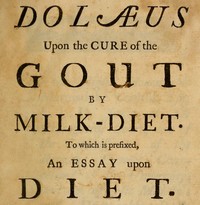
Dolæus upon the cure of the gout by milk-diet To which is prefixed, an essay upon diet Book Summary
The book's core ideas, presented through the lens of 18th-century humoral theory, are:
1. Gout Caused by 'Bad Humours': Dolæus believed gout resulted from an imbalance of bodily fluids (humours), specifically an excess of 'phlegm' and 'black bile', often exacerbated by rich foods, alcohol, and a sedentary lifestyle. Milk, being cooling and diuretic (aiding in the expulsion of waste), was thought to counteract these imbalances and flush out the offending substances.
2. The Milk Diet as a Detoxifying Agent: The prescribed cure involves consuming only milk and its derivatives for a specific duration (typically one month). The author details the types of milk (cow, goat, sheep), methods of preparation (warm, boiled, skimmed, etc.), and the foods allowed (primarily butter, cheese, whey, eggs cooked in milk). The goal was to cleanse the system, correct the humoural balance, and remove the underlying cause of the gout.
3. Rejection of Conventional Medicine: Dolæus expresses skepticism towards the invasive and often costly treatments offered by contemporary physicians. He champions a natural, accessible remedy that can be administered by the patient at home, emphasizing simplicity and cost-effectiveness over professional medical intervention.
4. Importance of Adherence and Diet in Maintenance: After the cure period, the book outlines a 'preventative diet' still heavily reliant on milk products, suggesting that strict adherence to this regimen is crucial for long-term relief and preventing relapse.
If you are interested in:
- The history of medicine and treatment approaches to diseases like gout.
- 18th-century dietary philosophies and humoral theory.
- Historically significant works proposing unconventional medical cures.
- The evolution of understanding gout from ancient to modern times.
- Books detailing specific dietary protocols (though with a focus on historical context).
This book offers valuable insights into these areas. However, be aware that the medical theories and treatments described are outdated and lack the scientific validation of modern medicine.
Yes, this book holds significant historical value. While the specific theory of gout causation (humours) and the cure (milk diet) are not accepted in modern medicine, the book remains relevant for:
1. Medical History: Understanding the progression of medical thought and how past beliefs influenced treatment approaches.
2. Dietary History: Exploring the dietary recommendations of different eras and how societal views on food and health have changed.
3. Skepticism and Critical Evaluation: It serves as an example of a medical claim that lacks rigorous scientific backing, highlighting the importance of evidence-based medicine.
Suggested Next Book: If you want to explore diet's role in managing gout today, consider reading The Stone Age Diet or The Gout Cure by Dr. William Philpotts.
| Reading on Gutenburg | Free reading |
| Get Paperback Version on Amazon | Buy a book |
| Suggest Book : The Stone Age Diet Book | Get on Amazon |