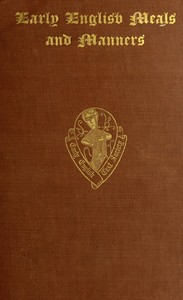
Early English Meals and Manners Book Summary
Published in 1908, Early English Meals and Manners by Frederick Hackwood offers a fascinating, and often surprising, glimpse into the daily lives of people in England from the medieval period through the reign of Queen Victoria. It's a detailed exploration of how food was prepared, served, and consumed, and how these practices reflected the social structures and evolving customs of the time. Hackwood doesn't just list dishes; he paints a picture of the entire dining experience, from the layout of the table to the etiquette expected of guests.
This book is a social history told through the lens of food. Hackwood meticulously researches and describes the evolution of meals – breakfast, dinner (which shifted in timing over the centuries), supper, and even snacks – and the accompanying customs. He covers everything from the types of food available based on social class and season, to the serving dishes used, the seating arrangements, and the often-peculiar rules of etiquette. It's a surprisingly comprehensive look at a fundamental aspect of daily life, revealing much about the values, beliefs, and anxieties of past generations.
One of the most striking lessons is the sheer difference in dining habits compared to today. For example, the concept of individual plates was a relatively late development. In medieval times, diners often shared large trenchers – slabs of stale bread – upon which food was placed. These trenchers served as both plate and a final course, often soaked with gravy and eaten at the end of the meal. The idea of personal space at the table was also very different; people sat much closer together, and communal serving was the norm. This highlights how much our modern sense of hygiene and individual comfort has shaped our dining experiences.
The book also demonstrates how deeply food and social status were intertwined. The wealthy enjoyed a vast array of meats, spices, and imported goods, showcasing their power and affluence. Their tables were laden with elaborate displays, and they employed large numbers of servants to prepare and serve the food. Conversely, the poor subsisted on a much simpler diet of grains, vegetables, and occasionally, small game. Hackwood details the specific foods associated with different classes, illustrating how diet was a visible marker of one’s position in society. He explains how even the types of cutlery used signaled status – forks, for instance, were initially considered effeminate and were adopted slowly, starting with the upper classes.
Furthermore, Early English Meals and Manners reveals the surprisingly complex and often bizarre etiquette rules that governed dining. Things we take for granted, like using a napkin, were not always common practice. There were specific rules about how to carve meat, how to offer food to your neighbor, and even how to behave during grace. These rules weren't simply about politeness; they were about maintaining social order and demonstrating respect (or lack thereof) for one's peers. The book is filled with anecdotes about breaches of etiquette and the social consequences that followed, offering a humorous yet insightful look into the anxieties surrounding social performance.
Finally, the book underscores the importance of seasonality in the diet. Before refrigeration and modern transportation, people were largely limited to eating what was available locally and in season. This meant that the menu changed dramatically throughout the year, with different foods being enjoyed at different times. Hackwood provides detailed descriptions of the seasonal foods available in England, highlighting the ingenuity and resourcefulness of cooks in making the most of what was on offer. This contrasts sharply with our modern ability to access almost any food at any time of year, and reminds us of the close connection between food and the natural world.
This book is perfect for you if:
- You're interested in social history and how people lived in the past.
- You enjoy learning about food and its cultural significance.
- You're fascinated by etiquette and manners.
- You appreciate detailed research and a somewhat academic writing style.
- You're a historical fiction writer looking for authentic details.
Yes, absolutely. While the specific meals and manners described in the book are largely obsolete, the underlying themes of social status, food security, and the performance of identity through dining remain incredibly relevant. Understanding how food has shaped social structures in the past can provide valuable insights into contemporary issues like food deserts, dietary inequalities, and the cultural politics of food. It also makes us appreciate the conveniences we have today.
To further explore the connection between food and society across a broader historical and geographical scope, I recommend:
| Reading on Gutenburg | Free reading |
| Get Paperback Version on Amazon | Buy a book |
| Suggest Book : Salt: A World History Book | Get on Amazon |
Early English Meals and Manners is a richly detailed and surprisingly engaging exploration of a bygone era. It's a testament to the power of food to reveal the complexities of human society and a reminder that even the most basic of our daily routines are shaped by history and culture. While a product of its time, its insights remain remarkably pertinent and offer a fascinating window into the past.