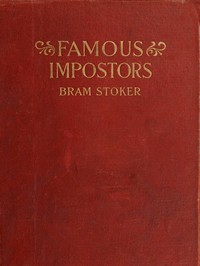
Famous Impostors Book Summary
"Famous Impostors" by Bram Stoker is a fascinating exploration of some of history's most notorious impostors. The book delves into the lives and deceptions of individuals who assumed false identities for various reasons, from personal gain to political intrigue. Stoker, best known for his iconic novel "Dracula," brings his keen storytelling skills to these real-life tales of trickery and deceit.
"Famous Impostors" is a collection of stories about individuals who successfully impersonated others or took on false identities. The book covers a wide range of impostors, including pretenders to the throne, royal impersonators, and even women who disguised themselves as men. Stoker meticulously researches each case, providing historical context and delving into the motivations behind their deceptions.
Impostors Throughout History: The book highlights that impostors have existed throughout history, from ancient times to the modern era. For example, Stoker discusses the case of Perkin Warbeck, who claimed to be Richard of Shrewsbury, one of the Princes in the Tower, and attempted to claim the English throne in the late 15th century.
Motivations Behind Deception: Stoker explores the various reasons why individuals choose to become impostors. Some are driven by personal gain, while others are motivated by political ambition or a desire to escape their circumstances. For instance, the case of Mary Baker, who pretended to be the Princess Caraboo of Javasu, highlights how desperation and a need for attention can lead to elaborate deceptions.
The Power of Perception: The book emphasizes how easily people can be deceived when they want to believe something is true. Stoker discusses how impostors often succeed because they exploit the hopes, fears, or biases of their victims. The story of the false Dmitry, who claimed to be the son of Ivan the Terrible and became Tsar of Russia, demonstrates how a convincing story can sway public opinion and gain political power.
The Consequences of Deception: Stoker also examines the consequences faced by impostors when their deceptions are uncovered. Many impostors met with violent ends, as in the case of Perkin Warbeck, who was executed after his failed rebellion. The book serves as a cautionary tale about the risks and repercussions of living a lie.
If you are interested in history, psychology, or true crime, "Famous Impostors" is a compelling read. The book offers a unique perspective on historical events and human behavior, showcasing the lengths to which people will go to achieve their goals. It is particularly suitable for readers who enjoy stories of intrigue, deception, and the complexities of human nature.
Yes, "Famous Impostors" remains relevant today. The themes of deception, identity, and the human desire for power and recognition are timeless. The book provides valuable insights into how and why people deceive others, which can help us understand modern-day impostors and fraudsters. Additionally, the historical context of the stories offers a fascinating glimpse into the past and the enduring nature of human behavior.
| Reading on Gutenburg | Free reading |
| Get Paperback Version on Amazon | Buy a book |
| Suggest Book : The Confidence Game: Why We Fall for It . . . Every Time by Maria Konnikova Book | Get on Amazon |
In conclusion, "Famous Impostors" by Bram Stoker is a captivating exploration of some of history's most notorious impostors. The book provides a detailed look at their deceptions, motivations, and the consequences they faced. It remains relevant today, offering insights into the timeless nature of human deceit. For readers interested in further exploring the psychology of deception, I recommend "The Confidence Game: Why We Fall for It . . . Every Time" by Maria Konnikova, which delves into the mechanics of cons and why they continue to succeed in the modern world.