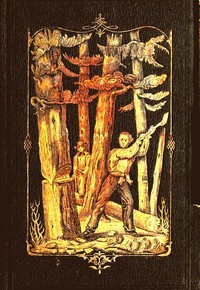
Forest Life and Forest Trees: comprising winter camp-life among the loggers, and wild-wood adventure. with Descriptions of lumbering operations on the various rivers of Maine and New Brunswick Book Summary
The book offers several key insights, blending natural history with human enterprise:
1. Interdependence of Forest Life: The author emphasizes that forests are complex ecosystems where every element—trees, plants, animals, insects, fungi, and even the soil—plays a crucial role. Understanding the relationships between these components reveals the fragility and resilience of the natural world, showing how changes in one part can ripple through the entire system.
2. Human Impact and Adaptation: The descriptions of lumbering operations vividly illustrate the direct impact humans have on the forest. The book details the methods used to fell trees, the labor-intensive process of log transportation (often via rivers), and the gradual clearing of vast tracts of land. It portrays the loggers as both operators within and sometimes seeming participants in the forest's rhythms, adapted to its challenges but also actively shaping its landscape.
3. Life in Harsh Conditions: The 'winter camp-life' section offers a firsthand account of survival in extreme environments. It explores the ingenuity, resilience, and close-knit community required to live and work in the forest during the coldest months, highlighting the stark realities and unique character of that existence, away from settled communities.
4. The Economic and Industrial Significance of Forests: The book underscores the vital role forests played (and still play) as sources of material for building, fuel, and livelihood. It details the organized, often large-scale, industry of lumbering that drove regional economies and connected forests to broader markets, showing how natural resources fuel human progress and development.
If you are interested in:
- Historical accounts of 19th-century North America.
- The natural history of forests and ecology.
- The lifestyle and work of lumberjacks and loggers in the past.
- The history of industry and resource extraction.
- The intersection of human activity and the natural environment.
- Engaging narratives of adventure and wilderness exploration.
This book is likely to be a good fit for you.
Yes, this book still matters today. The fundamental relationship between humans and forests remains incredibly relevant. Issues like sustainable forestry, understanding ecosystem dynamics, and the impact of industry on natural habitats continue to be pressing concerns. The book provides a valuable historical baseline for understanding how forests were perceived, managed (or exploited), and lived within, offering context for contemporary debates about conservation, logging practices, and the preservation of wilderness areas.
Given its focus on the specific historical context of 19th-century lumbering in the Northeast, if you want a more current perspective on forestry and conservation in North America, consider reading:
suggest_book
| Reading on Gutenburg | Free reading |
| Get Paperback Version on Amazon | Buy a book |
| Suggest Book : The Overstory Book | Get on Amazon |