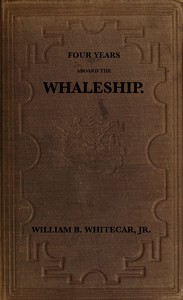
Four years aboard the whaleship Embracing cruises in the Pacific, Atlantic, Indian, and Antarctic oceans, in the years 1855, '6, '7, '8, '9 Book Summary
The book offers several profound insights, primarily through the lens of a young man navigating extreme hardship and the vastness of the world:
1. The Indifference of Nature and the Power of Survival: Haskins' account emphasizes how life at sea, especially during dangerous voyages like whaling, places human existence in direct confrontation with the indifferent forces of nature. Storms can destroy a ship, vast oceans offer no escape, and the sea itself is portrayed as both provider and threat. The constant struggle to maintain the ship, catch whales, and endure physical labor in harsh conditions teaches a raw lesson in adaptability and resilience. For instance, the ship's crew must constantly repair damage from storms and navigate treacherous waters, highlighting the fragility of human control in the natural world.
2. The Transformative Power of Adversity and Experience: The four years aboard the ship are clearly a formative period for Haskins. The relentless work, the hardships, the loneliness, and the exposure to different ports and cultures strip away youthful illusions and instill a deep appreciation for human effort and the realities of life beyond the comforts of home. This experience acts as a rite of passage, shaping his character and perspective in ways that academic learning cannot. He learns patience, self-reliance, and the value of practical skills through direct, often brutal, experience.
3. The Human Element in Isolation: Life on a ship, far from land, fosters a unique microcosm. The dynamics of the crew, the shared hardships, and the need for cooperation (or conflict) highlight fundamental human traits. Isolation magnifies relationships, both positive and negative. The book implicitly suggests that shared adversity can forge deep bonds, but it can also reveal underlying tensions and selfishness within a group. The crew members are depicted as individuals with their own stories, motivations, and flaws, existing within the tight confines of the ship's environment.
4. The Economic and Ethical Dimensions of Whaling: While primarily an adventure story, the book inevitably touches upon the context of whaling. It describes the process and the economic necessity driving the voyages, but also implicitly raises questions about the immense scale of the whaling industry and its impact on whale populations (though environmental awareness wasn't a conscious issue at the time). The reader understands the immense effort required to earn a living through whaling, providing a ground-level view of this industry.
If you are interested in:
- Classic Maritime Adventure Narratives: You'll appreciate the detailed description of ocean voyages, whaling techniques, and life aboard a ship.
- Historical Perspectives: You might be interested in 19th-century maritime history, the whaling era, and the experiences of sailors during that period.
- Coming-of-Age Stories: The transformation experienced by the narrator could appeal to readers interested in personal growth through hardship.
- Realistic Depictions of Seafaring Life: The book offers a gritty, unromanticized view of the dangers and routines of whaling expeditions.
- Early American Literature or Exploration: As an early account, it provides insight into mid-19th-century exploration and frontier experiences.
However, be aware that the tone can be quite grim and focuses heavily on the hardships and dangers of the sea. It is not a swashbuckling adventure tale in the conventional sense but a stark, realistic account.
Yes, the book's matter still holds relevance, albeit in a different context:
While the whaling industry has drastically changed (and is largely banned in many parts of the world), the core themes explored in the book remain relevant. The human experience of facing vastness, isolation, danger, and hardship is timeless. The themes of resilience, adaptation, the relationship between humans and the natural world, and the transformative power of extreme experience continue to resonate. It offers a powerful perspective on how individuals cope and grow when pushed to the limits of their endurance. The book reminds us of our smallness in the face of nature and the profound ways our environments shape us.
| Reading on Gutenburg | Free reading |
| Get Paperback Version on Amazon | Buy a book |
| Suggest Book : The Old Man and the Sea Book | Get on Amazon |