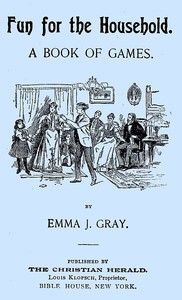
Fun for the Household: A Book of Games Book Summary
Published in 1886, Fun for the Household: A Book of Games offers a fascinating glimpse into Victorian-era family entertainment. It's a charming relic of a time when families relied heavily on self-made amusement, lacking the pervasive screens and commercial entertainment options we have today. The book is a testament to the ingenuity and social values of the period, prioritizing togetherness and mental stimulation.
This book is a collection of over 200 games, puzzles, and amusements designed for families to enjoy together. The games range from simple charades and word games to more complex parlor games involving storytelling, drawing, and even light physical activity. It's categorized into sections like 'Games for the Fire Side,' 'Games for the Table,' 'Blind Man’s Buff and Other Games of Pursuit,' and 'Riddles and Charades,' offering a diverse range of options for different ages and group sizes. The author, Aunt Charlotte, clearly intended to provide a resource for fostering family bonds and creating joyful memories.
One of the most striking aspects of Fun for the Household is its emphasis on verbal and imaginative play. Many of the games rely solely on conversation, wit, and the ability to create narratives. For example, games like 'Consequences' involve each person writing a sentence on a piece of paper, folding it over, and passing it on, resulting in a hilariously nonsensical story. This highlights a key difference from modern entertainment – the active role of participants in *creating* the fun, rather than passively consuming it. It’s a reminder that some of the most engaging experiences are those we build ourselves.
The book also demonstrates the Victorian value of social grace and polite interaction. Many games require players to be observant, tactful, and respectful of others. 'The Minister's Cat' is a game where players must subtly ask questions to deduce a secret object, demanding careful listening and thoughtful questioning. The rules often include stipulations about avoiding offense or being overly competitive, reflecting a cultural emphasis on maintaining harmonious relationships within the family and social circle. This is a subtle lesson in emotional intelligence and social skills.
Furthermore, Fun for the Household showcases the importance of resourcefulness and making do with what you have. The games generally require minimal props – a pencil, a piece of paper, or common household items are often sufficient. This contrasts sharply with the often-expensive and specialized equipment associated with modern games and hobbies. The book encourages families to find entertainment in everyday objects and situations, fostering creativity and a sense of self-sufficiency. It's a practical guide to fun that doesn't require a trip to the store.
Finally, the sheer variety of games underlines the value of adaptability and catering to different preferences. Aunt Charlotte provides options for quiet evenings, lively gatherings, and different age groups. This suggests a thoughtful approach to family entertainment, recognizing that what appeals to one person may not appeal to another. The book encourages hosts to be flexible and adjust the games to suit the mood and the participants, ensuring everyone has a good time. It's a lesson in inclusive fun.
You might enjoy this book if:
- You're interested in Victorian history and social customs.
- You're looking for screen-free activities for family gatherings.
- You enjoy word games, riddles, and storytelling.
- You appreciate a nostalgic and charming approach to entertainment.
- You want to spark creativity and imagination in yourself and others.
Yes, absolutely. While the context is historical, the core principles of fostering family connection, encouraging imaginative play, and finding joy in simple activities are timeless. In a world dominated by digital distractions, the book serves as a valuable reminder of the power of face-to-face interaction and shared experiences. The games themselves, with a little adaptation, can still be incredibly fun and engaging.
| Reading on Gutenburg | Free reading |
| Get Paperback Version on Amazon | Buy a book |
| Suggest Book : Rebecca Book | Get on Amazon |
Fun for the Household is more than just a collection of games; it's a window into a different era and a celebration of family values. While its style may seem quaint by today's standards, its underlying message of connection, creativity, and simple joy remains remarkably relevant. It’s a delightful read and a source of inspiration for anyone seeking to create more meaningful moments with their loved ones.