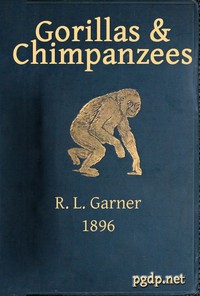
Gorillas & Chimpanzees Book Summary
Introduction
This summary explores an early 20th-century work on the behavior and social structures of gorillas and chimpanzees, providing context and key insights from the book's perspective.
What is this book about?
Originally published around 1920, this book offers observations and interpretations of the social lives, physical characteristics, and behaviors of gorillas and chimpanzees. Written from a scientific and anthropological standpoint common at the time, it details the natural history and interactions observed in these great apes, attempting to draw parallels and contrasts with human society and evolution. It provides a historical snapshot of how these animals were perceived and understood before the modern era of primatology.
Key Lessons
The book primarily serves as a record of its time's understanding of these primates. One core lesson is the observation of complex social structures in chimpanzees, showcasing their intelligence, tool use (as understood then), and social dynamics, which was groundbreaking for its era.
It also details the more solitary, territorial nature of gorillas, emphasizing their strength and role as dominant males (silverbacks). The author meticulously compares and contrasts the two species, highlighting their distinct ecological niches and behavioral repertoires.
Furthermore, the book reflects the prevailing scientific views on evolution and humanity's place in the animal kingdom. It often implicitly or explicitly connects gorilla and chimpanzee behaviors to human evolution, attempting to place humans within a continuum of primate development. The descriptions often anthropomorphize the animals to some degree, framing their actions in ways familiar to human readers of the time.
Overall, the key lesson isn't necessarily new science, but rather a fascinating glimpse into the early attempts to scientifically understand our closest living relatives and the cultural context in which that understanding was formed.
Is this book fit for me?
If you are interested in the history of science and anthropology, this book offers valuable context on how our understanding of primates has evolved. You might appreciate its archaic language and style, viewing it as a historical document rather than a modern scientific treatise.
It could be useful for comparative purposes, allowing you to contrast early observations with current knowledge. Readers interested in the origins of human understanding of animals might find it engaging. However, if you seek up-to-date, rigorous primatology, this book will likely disappoint due to its age and limited scope.
Does it still matter today?
Yes, this book still matters today primarily as a historical artifact. It provides crucial context for the development of primatology, showing the initial steps scientists took to observe and interpret ape behavior without the benefit of modern research techniques and ethical considerations. It highlights how scientific understanding evolves over time and how early assumptions were often challenged by later findings.
It also serves as a reminder of the changing relationship between humans and other species, reflecting a time when animals were often viewed more through a lens of difference and utility than through the framework of conservation and animal rights that is prominent today.
While the specific content isn't essential reading for modern primatology, its historical significance is undeniable. The book represents a snapshot of human curiosity and inquiry into our animal relatives from a bygone era.
**Suggested Book:** "The Inner Life of Animals" by Peter Marlow
Reason: While vastly different in approach, this newer book offers a contemporary exploration of animal consciousness and inner lives, providing a stark contrast to the historical perspective offered by the original text and reflecting current scientific and philosophical debates.
| Reading on Gutenburg | Free reading |
| Get Paperback Version on Amazon | Buy a book |
| Suggest Book : The Inner Life of Animals Book | Get on Amazon |
Conclusion
In conclusion, 'Gorillas & Chimpanzees' is a product of its time, offering early 20th-century observations and interpretations of these fascinating primates. While not a current scientific reference, its historical value lies in documenting the early stages of understanding our primate relatives and reflecting the scientific and cultural context of that period. It remains relevant for those interested in the history of science and the evolution of human perspectives on animals.