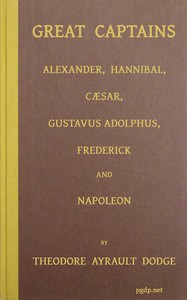
Great captains Book Summary
The Importance of Character: Roosevelt repeatedly emphasizes that military genius isn't enough. A leader must possess strong moral character, a sense of duty, and the ability to inspire trust and loyalty. He contrasts figures like Alcibiades, brilliant but ultimately self-serving and unreliable, with those like Caesar and Napoleon, who, despite their flaws, commanded immense devotion from their troops. Alcibiades’ brilliance was often overshadowed by his shifting allegiances and personal ambition, ultimately hindering his long-term success. This highlights Roosevelt’s belief that a leader’s integrity is paramount.
Boldness and Initiative: The “great captains” weren’t afraid to take risks and deviate from conventional wisdom. Hannibal’s audacious crossing of the Alps, despite the immense logistical challenges and dangers, is a prime example. Similarly, Napoleon’s innovative battlefield tactics, often involving rapid maneuvers and concentrated attacks, consistently surprised and overwhelmed his opponents. Roosevelt admires this willingness to embrace the unconventional, arguing that hesitation and timidity are the enemies of victory. He believed that a leader must be decisive and willing to act, even in the face of uncertainty.
<Understanding the Political Landscape: Roosevelt stresses that successful military leadership requires a keen understanding of the political context. Themistocles, for example, wasn't just a naval commander; he was a shrewd politician who understood how to manipulate public opinion and forge alliances to achieve his goals. Pericles, too, was a master of political maneuvering, using his influence to promote Athenian democracy and expand its power. Ignoring the political ramifications of military actions, Roosevelt argues, can lead to even the most brilliant victories being squandered. A captain must be able to navigate the complexities of power and influence to secure lasting success.
The Power of Personal Magnetism: Roosevelt notes that all of these leaders possessed a certain charisma – a quality that allowed them to connect with and motivate their followers. This wasn't simply about being likable; it was about projecting confidence, inspiring courage, and fostering a sense of shared purpose. Caesar’s legendary rapport with his legions, and Napoleon’s ability to rally his troops even in the face of defeat, are frequently cited as examples. Without this ability to inspire, even the most brilliant strategies can fall flat.
- You are interested in military history, but more specifically, the *people* behind the battles.
- You enjoy biographical studies and character analysis.
- You are fascinated by leadership and want to understand the qualities that make a great leader.
- You appreciate a writing style that is both engaging and intellectually stimulating.
- You are interested in the historical context of leadership and how it has evolved.
| Reading on Gutenburg | Free reading |
| Get Paperback Version on Amazon | Buy a book |
| Suggest Book : The Prince Book | Get on Amazon |