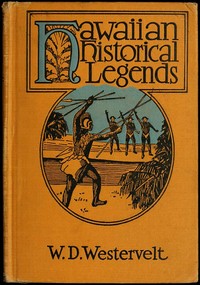
Hawaiian Historical Legends Book Summary
Introduction
\"Hawaiian Historical Legends\" is a collection of traditional stories, myths, and historical accounts from the Hawaiian Islands. Compiled from various sources and oral traditions, this book offers a glimpse into the rich cultural heritage, ancient beliefs, and historical events that shaped the unique society of Hawaii. It serves as both an educational resource and a cultural repository, preserving narratives that are central to understanding the Hawaiian identity.
What is this book about?
This book compiles a diverse range of narratives passed down through generations of Hawaiians. It includes creation myths explaining the formation of the islands and the origins of the Hawaiian people, legends about powerful demigods and chiefs who governed ancient Hawaii, stories of significant battles and voyages, accounts of natural phenomena, and traditions surrounding important cultural practices like hula, chant (mele), and sacred ceremonies (hoʻomana). The book aims to preserve these stories, often drawing from historical documents, missionary records, and direct accounts from native informants, presenting them within the context of Hawaiian cosmology and societal values. It is less a strictly factual historical chronicle and more a treasury of the cultural imagination and memory of the Hawaiian people.
Key Lessons
Understanding the intricate relationship between the natural environment and Hawaiian spirituality is paramount. The legends are replete with deities associated with specific elements like mountains (Waianae), volcanoes (Kilaeoa), the ocean (Kanaloa), and the sky (Lono). This teaches a profound respect for nature and the belief that natural forces are imbued with life and power. For instance, the legend of Pele, the fire goddess, emphasizes her volatile power over volcanic landscapes and the deep connection between geological phenomena and divine presence. Another crucial lesson is the emphasis on kinship, both human and divine. Hawaiian society was structured around clans (makaʻāina) and the kapu system, which established sacred laws and hierarchies based on lineage and relationship. The legends illustrate how social order, mana (divine power/authority), and holiness were deeply intertwined with familial and tribal connections. This contrasts sharply with many Western concepts of individualism. Furthermore, the stories highlight the importance of oral tradition and memory in preserving culture. The very act of collecting and recording these legends, as done in this book, underscores their role in maintaining cultural continuity. Lessons often involve themes of sacrifice, balance, the consequences of hubris, and the cyclical nature of life, death, and restoration, reflecting the ancient worldview that governed Hawaiian actions and beliefs.
Is this book fit for me?
If you are interested in:
1. Hawaiian culture, history, and mythology.
2. Understanding Polynesian navigation and worldview.
3. Studying how oral traditions shape and preserve a culture.
4. Learning about the indigenous beliefs and relationship with the natural world.
5. Exploring themes common in Pacific Island legends.
6. Reading in an educational or anthropological context.
Then this book is likely a good fit for you. It provides foundational stories that are essential for grasping the cultural context of modern Hawaii and offers fascinating insights into a distinct and ancient civilization. However, if you are looking for a purely factual modern history of Hawaii's political development or contemporary social issues, this book may not be the most direct resource.
Does it still matter today?
Yes, absolutely. These legends and historical accounts are not just artifacts of the past; they are living elements of Hawaiian culture and identity. They provide the foundational stories and values that continue to influence Hawaiian perspectives on land, governance, spirituality, and community. Understanding these legends helps contemporary Hawaiians connect with their heritage and strengthens cultural resilience. Furthermore, for non-Hawaiians, these stories offer a window into a unique cultural perspective, fostering greater understanding and appreciation of indigenous ways of knowing and being in the world. They challenge dominant narratives and provide alternative frameworks for understanding human experience, ecology, and society.
| Reading on Gutenburg | Free reading |
| Get Paperback Version on Amazon | Buy a book |
| Suggest Book : How the Maori Peopled New Zealand: Full text of the 1891 edition of Sir George Grey's 'Polynesian Mythology' Book | Get on Amazon |
Conclusion
\"Hawaiian Historical Legends\" is a valuable source for anyone seeking to understand the soul of the Hawaiian archipelago. It offers a treasury of captivating stories that reveal the ancient beliefs, societal structures, and relationship with the natural world of its indigenous people. While it is a product of its time (compiled in the early 20th century), its core content—the legends themselves—remain vital. They continue to shape Hawaiian culture and offer profound insights for anyone interested in indigenous knowledge, mythology, and the diverse ways humans interpret their existence. This book provides an essential foundation for appreciating the depth and richness of Hawaiian history and identity.