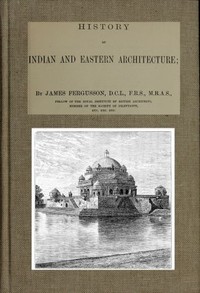
History of Indian and Eastern Architecture Book Summary
"History of Indian and Eastern Architecture" by James Fergusson is a comprehensive two-volume work that delves into the architectural heritage of India and other Eastern regions. First published in 1876, with a second edition in 1910, this monumental study covers a wide range of architectural styles, including Hindu, Buddhist, Jain, and Islamic, as well as the architecture of Southeast Asia and the Far East. Fergusson's work is notable for its detailed descriptions, historical context, and numerous illustrations, making it a foundational text in the study of Eastern architecture.
This book provides an in-depth exploration of the architectural traditions of India and the broader Eastern world. It examines the development of various architectural styles, from ancient rock-cut temples to grand Islamic monuments, and includes detailed discussions on the influence of religion, culture, and geography on architectural forms. The book is richly illustrated with plans, sections, and photographs, offering a visual journey through the architectural marvels of the East.
Diversity of Styles: The book highlights the incredible diversity of architectural styles in India and the East, from the intricate carvings of Hindu temples to the majestic domes of Islamic mosques. For example, the detailed descriptions of the rock-cut temples at Ellora and the grandeur of the Taj Mahal illustrate the range of architectural expression.
Influence of Religion: Fergusson emphasizes the profound impact of religion on architecture. Hindu, Buddhist, and Jain temples each have distinct characteristics, such as the towering gopurams of South Indian temples and the serene stupas of Buddhist sites. The book explains how religious beliefs and practices shaped the design and construction of these structures.
Historical Context: The book provides valuable historical context, tracing the evolution of architectural styles over time. For instance, it discusses how the arrival of Islam in India introduced new architectural elements like minarets and arches, which were blended with indigenous styles to create unique forms such as Indo-Islamic architecture.
Geographical Variations: Fergusson explores how geography influenced architecture, noting the differences between the stone temples of South India and the brick and timber structures of the North. The book also covers the architectural traditions of Southeast Asia, such as the Khmer temples of Cambodia and the pagodas of China and Japan.
Architectural Techniques: The book delves into the construction techniques and materials used in Eastern architecture, from the use of corbelled arches in early Indian temples to the sophisticated stone masonry of the Mughal period. It also discusses the symbolic meanings behind architectural features, such as the use of mandalas in temple design.
This book is ideal for readers interested in:
- Comprehensive coverage of Indian and Eastern architectural history.
- Detailed descriptions and illustrations of architectural landmarks.
- Understanding the influence of religion and culture on architectural styles.
- Exploring the evolution of architectural techniques and materials in the East.
- Gaining insights into the historical and geographical contexts of Eastern architecture.
Yes, this book remains relevant today as it provides a foundational understanding of Eastern architectural history. Its detailed descriptions and illustrations continue to be valuable resources for students, scholars, and enthusiasts of architecture. The historical and cultural insights offered by Fergusson are timeless, making this work a classic in the field.
| Reading on Gutenburg | Free reading |
| Get Paperback Version on Amazon | Buy a book |
| Suggest Book : Indian Architecture (Buddhist and Hindu Period) by Percy Brown Book | Get on Amazon |
"History of Indian and Eastern Architecture" by James Fergusson is an essential read for anyone interested in the rich architectural heritage of the East. Its comprehensive coverage, detailed illustrations, and insightful analysis make it a timeless resource. While some information may be dated, the foundational knowledge it provides remains invaluable. For those looking to delve deeper into the subject, Percy Brown's "Indian Architecture (Buddhist and Hindu Period)" is a recommended next read, offering a more focused exploration of Indian architectural history.