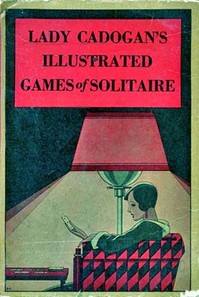
Lady Cadogan's Illustrated Games of Solitaire or Patience New Revised Edition, including American Games Book Summary
Introduction
Welcome to a summary of 'Lady Cadogan's Illustrated Games of Solitaire or Patience, New Revised Edition, including American Games'. This book, published in the early 20th century, offers a collection of classic card games centered around solitaire and patience. It's presented as a guide to these solitary pastimes, complete with instructions and illustrations. While a product of its time, it provides fascinating insight into how people played and enjoyed card games during the Victorian and Edwardian eras.
What is this book about?
'Lady Cadogan's Illustrated Games of Solitaire or Patience' is a compilation of rules and instructions for various solitaire card games. Published around the turn of the 20th century, it aims to be a comprehensive guide for enthusiasts. The book covers numerous traditional solitaire variants, many of which are now considered historical rather than commonly played today. It includes descriptions of standard Patience games, variations like 'Cribbage Patience', and notably incorporates 'American Games', which likely refer to versions popular in the United States. The illustrations within the book are intended to clarify the rules and layouts for the player.
Key Lessons & Insights
While not a modern instructional text, this book offers valuable insights into the world of early 20th-century card games and game design:
1. Diversity of Solitaire Variants: The book meticulously details a wide array of solitaire rulesets, far more than many modern collections. It demonstrates that 'solitaire' wasn't a fixed game but a category encompassing many different strategies and layouts. For example, it distinguishes between Klondike (a common starting point for many modern players) and variants like 'Golf' or 'Cribbage Patience', which involve unique gameplay mechanics like scoring holes or using a cribbage board.
2. Historical Context of Game Design: The rules presented reflect the conventions and understandings of card play from that period. Concepts like 'movable rank' (where a card can move to an empty space regardless of rank) or specific foundation building rules differed or were less standardized than in today's most popular versions. This highlights how games evolve over time and were designed for different purposes, perhaps emphasizing different aspects like patience, strategic planning, or sheer endurance.
3. The Appeal of Solitaire as a Pastime: The book positions solitaire not just as a game but as a valuable tool for relaxation, entertainment, and mental exercise for individuals. It taps into the Victorian/Edwardian fascination with structured leisure activities that could be enjoyed privately, away from the bustle of public life or the company of others. The emphasis on 'Patience' is particularly telling, linking the game's title and its perceived virtue.
4. Illustration as Instruction: The author relies heavily on illustrations to clarify complex layouts, card placements, and winning conditions. This underscores the importance of visual aids in understanding spatial games and demonstrates the craftsmanship of book illustration from that era.
Is this book fit for me?
This book is ideal for:
- History Buffs: Those interested in the history of card games, Victorian/Edwardian culture, or the evolution of pastimes.
- Collectors: Fans of classic card game books, especially those seeking historical variants, or collectors of early 20th-century books.
- Gamers Seeking Niche Variants: Players who enjoy exploring obscure or historical versions of solitaire beyond the standard Klondike.
- Those Appreciating Art of the Past: Readers who value the illustrations and the aesthetic of older publications.
It may not be suitable if:
- You are looking for up-to-date rules or highly optimized modern versions of solitaire.
- You prefer graphical interfaces over text-based instructions.
- You are seeking contemporary analysis of game strategies.
Does it still matter today?
While the specific variants detailed in this book are less commonly played today, its core value as a historical document remains significant. The fundamental appeal of solitaire as a solitary, relaxing pastime still exists. However, for someone primarily interested in playing solitaire, this book offers limited practical value due to its age and the existence of more accessible, visually engaging modern guides.
**Suggestion:** If you enjoyed this historical look at solitaire and want a more comprehensive, visually appealing guide to a wide range of solitaire and patience games suitable for modern play, we suggest reading 'The Complete Book of Solitaire & Patience Games' by Lyle Stuart.
| Reading on Gutenburg | Free reading |
| Get Paperback Version on Amazon | Buy a book |
| Suggest Book : The Complete Book of Solitaire & Patience Games Book | Get on Amazon |
Conclusion
'Lady Cadogan's Illustrated Games of Solitaire or Patience' is a valuable piece of card game literature from the early 1900s. It provides a fascinating window into the diversity of solitaire variants that existed before the dominance of Klondike. While perhaps not the first choice for someone wanting to play modern solitaire, it serves excellently as a historical artifact, offering detailed rules for many forgotten games and showcasing the art and design of its time. It's a recommended read for historians, collectors, and dedicated players seeking to explore the rich heritage of patience games.