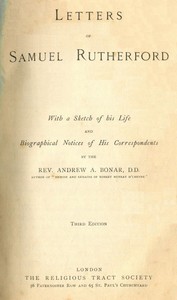
Letters of Samuel Rutherford (Third Edition) Book Summary
Core Content
The book primarily contains letters written by Samuel Rutherford to various correspondents, including fellow ministers, church leaders, family members, and individuals seeking spiritual guidance. Many of these letters are responses to theological controversies of the day, especially the disputes surrounding the National Covenant and the Solemn League and Covenant, and the heated debates about the nature of Christ (the 'National Cause' debates).
Beyond polemics, the collection includes letters offering pastoral comfort, personal reflections on his faith journey, accounts of his ministry, and expressions of his deep commitment to the sovereignty of God and the authority of Scripture. Rutherford's letters reveal his character: a man of profound piety, strong convictions, eloquent expression, and deep pastoral heart.
Key Lessons from Rutherford's Letters
1. Unwavering Faith in the Face of Adversity: Rutherford's letters are marked by a steadfast belief in God's sovereignty and goodness, even amidst persecution, imprisonment (he was twice imprisoned for his faith), and intense controversy. For example, his famous letter defending Presbyterianism against Arminian influences showcases a deep, unwavering commitment to his theological convictions, rooted in his understanding of Scripture. This teaches the value of holding fast to one's faith regardless of external pressures.
2. The Primacy of Scripture and Biblical Literalism: Rutherford's arguments are consistently grounded in Scripture. He believed the Bible was the ultimate authority for faith and practice. His defense of Presbyterianism, for instance, often involved detailed exegesis of relevant biblical texts. This emphasizes the importance of a robust, Scripture-based worldview and the necessity of careful biblical interpretation in theological reasoning.
3. Pastoral Heart and Personal Engagement with God: Despite the often formal and academic tone, many letters reveal Rutherford's deep personal piety and his compassionate care for individuals. He wrote to guide, comfort, and admonish, often sharing his own spiritual experiences and struggles. This demonstrates that intellectual rigor and heartfelt devotion can coexist, and that faith involves personal relationship and practical application in daily life.
4. Grace, Sovereignty, and Assurance: A recurring theme is the doctrine of salvation by God's sovereign grace. Rutherford emphasizes God's choice, Christ's work, and the assurance believers have through faith. His letters frequently encourage believers to rest in God's grace rather than relying on their own merits or understanding, highlighting the assurance that comes from a solid grasp of divine sovereignty and redemption.
Who Might Benefit?
- Those interested in the history of Christianity, particularly the Reformation era and the development of Presbyterianism.
- Students of theology or church history seeking primary source material on 17th-century Scottish Presbyterian thought.
- Individuals drawn to a theology that emphasizes divine sovereignty, the authority of Scripture, and personal assurance in Christ.
- Pastors or theologians looking for an example of pastoral writing and argumentation from an earlier era.
- Anyone seeking insight into the life of faith under pressure or wanting to understand historical contexts of religious debates.
If you appreciate rich, devotional theology and historical context, this book is likely for you.
Enduring Relevance?
Yes, Samuel Rutherford's letters retain significant matter today. His profound commitment to God's Word, his defense of Reformed theology based on scriptural exegesis, and his emphasis on assurance through grace remain highly relevant themes in contemporary Christian thought and discussion. His letters provide a powerful model of integrating deep doctrine with personal piety and pastoral care. Furthermore, they offer valuable historical perspective on the roots of many current theological discussions about authority, grace, and the nature of the church. They remind us of a time when faith was lived more intensely in the face of explicit persecution, challenging us to consider the depth of our own commitment.
For those seeking further exploration in this vein, I suggest reading: suggest_book: Surprised by Oxford: Some Aspects of Anglicanism Today by Michael Ramsey.
This book continues the conversation in a later Anglican context, exploring themes of authority, worship, and the relationship between doctrine and life, building upon the rich theological heritage Rutherford represents.
| Reading on Gutenburg | Free reading |
| Get Paperback Version on Amazon | Buy a book |
| Suggest Book : Surprised by Oxford: Some Aspects of Anglicanism Today Book | Get on Amazon |
Final Thoughts
'Letters of Samuel Rutherford' offers more than just historical artifacts; it provides a direct encounter with a man of deep faith navigating complex spiritual and theological waters. His letters are a testament to a life lived under God's sovereignty, guided by Scripture, and animated by a love for Christ and His church. While the specific historical disputes may seem distant, the underlying theological principles and the personal expression of faith continue to resonate. For anyone seeking insight into the intersection of historical Christianity, deep theology, and lived faith, this collection remains a profoundly rewarding read.