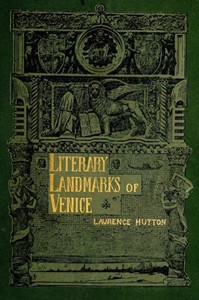
Literary Landmarks of Venice Book Summary
Introduction
Welcome to a journey through the storied canals and labyrinthine alleys of Venice, filtered through the lens of literature. This summary explores 'Literary Landmarks of Venice,' a work that invites readers to discover the city not just as a collection of physical structures, but as a vibrant tapestry woven with threads from countless literary masterpieces. From the grandest palaces to the humblest bridges, the book connects historical sites with the fictional and real characters, events, and emotions captured by authors across centuries. Prepare to see St. Mark's Square not just as a landmark, but as the backdrop for countless narratives, and the Rialto Bridge as a symbol of trade, power, and artistic competition in stories both true and imagined.
What is this book about?
'Literary Landmarks of Venice' is a guidebook that reimagines the city by focusing on its significance in literary history. Instead of merely listing buildings and historical facts, the book delves into specific works of literature—poetry, novels, plays, and non-fiction—that prominently feature Venice or Venetians. It explores how authors like Shakespeare (in plays like 'Othello' and 'The Merchant of Venice'), James Fenimore Cooper, Henry James, and Italo Calvino have drawn inspiration from the city's unique atmosphere, its history of republicanism, its trade secrets, its mask culture, and its melancholic beauty. The book likely traces these literary connections geographically, linking specific landmarks to specific literary references, offering readers a dual experience of appreciating both the physical city and its rich literary heritage.
Key Lessons
This book demonstrates the profound power of literature to shape and reshape places. Venice, often called 'La Serenissima,' is presented not just as a physical entity, but as an idea, a concept conjured by writers. Key lessons include:
1. The City as Character: Venice is frequently portrayed as a character in its own right, influencing the actions and fates of its inhabitants. Its labyrinthine layout can symbolize confusion or intrigue (like in Calvino's 'Invisible Cities'), its canals evoke melancholy or sensuality, and its history of isolation and trade fosters themes of secrecy and connection. For example, Shakespeare's 'Othello' uses the setting of Cyprus (a Venetian territory) to heighten the tragedy of jealousy and racial tension.
2. Historical Reflection and Mythmaking: Literary Venice often serves as a mirror for contemporary anxieties or a stage for historical imagination. Authors revisit Venice to explore themes like colonialism (Cooper's 'The Pilot'), the conflict between individual desire and societal norms (Henry James' 'The Wings of the Dove'), or the very nature of storytelling itself (Calvino). The book highlights how these literary choices both reflect and refract Venetian history, sometimes even creating a more enduring image of the city than historical records alone.
3. The Interplay of Place and Story: The book emphasizes how specific Venetian locations—like the Doge's Palace with its intricately carved Tiepolo ceilings, the Rialto Market, the Dorsoduro district, or the Fondamenta dei Mori—became iconic in literature because they were imbued with narrative significance. A palace might represent power and intrigue, a bridge might symbolize social exchange or division, and a campo might serve as a stage for social gatherings or supernatural encounters. Understanding this interplay deepens the appreciation of both the literature and the architecture.
4. Cultural Identity Through Literature: By mapping literary references onto physical landmarks, the book argues that literature plays a crucial role in constructing and preserving a place's cultural identity. It shows how writers have contributed to the 'mythology' of Venice, ensuring its continued fascination long after its political power faded. The landmarks discussed are, in many ways, the 'literary' landmarks, defined by the stories attached to them.
Is this book fit for me?
This book would be particularly fitting if you are:
- An admirer of Venice, whether through travel, art, or film, and curious about its literary dimension.
- A literature or history enthusiast interested in how places are represented and mythologized in texts.
- Seeking a unique way to explore the city that goes beyond typical tourist guides.
- Enjoying a coffee break or a dedicated reading session and looking for a thought-provoking, engaging read.
- Open to exploring connections between architecture, history, and storytelling.
It might be less suitable if you are primarily interested in detailed historical accounts of Venetian politics or architecture without the literary context, or if you find literary analysis dense and challenging.
Does it still matter today?
Yes, absolutely. 'Literary Landmarks of Venice' remains highly relevant today. It underscores the enduring power of literature to shape our understanding and emotional connection to places. Venice, despite facing modern challenges like tourism and climate change, continues to captivate the imagination, largely because of the powerful literary images cultivated over centuries. The book's exploration of how specific locations became inseparable from specific narratives helps us understand why Venice retains its unique allure. It reminds us that places are not just bricks and mortar, but living entities defined by the stories we tell about them. Understanding this literary history enriches any visit, any encounter with Venetian art or film, or any discussion about the city's legacy.
| Reading on Gutenburg | Free reading |
| Get Paperback Version on Amazon | Buy a book |
| Suggest Book : The Architecture of Venice: From the Sixteenth to the Eighteenth Century by William Walsh Book | Get on Amazon |
Conclusion
In essence, 'Literary Landmarks of Venice' offers a unique and enchanting perspective on one of the world's most captivating cities. It transforms a guidebook into a literary tour, revealing how the very stones of Venice have echoed with the imagination of writers for generations. It highlights the symbiotic relationship between a place and the stories told about it, demonstrating that the most memorable landmarks are often those etched by the pens of great authors. This book provides a deeper, more culturally resonant way to appreciate Venice, proving that literature remains a vital key to unlocking the soul of any place. It's a celebration of both the physical city and the enduring magic of storytelling.