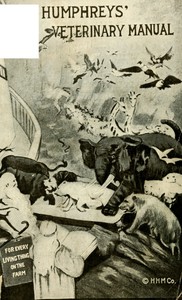
Manual of veterinary homeopathy Book Summary
Published in 1890, Manual of Veterinary Homeopathy by C.J.T. Dyce is a fascinating glimpse into the early application of homeopathic principles to animal healthcare. It's a product of its time, reflecting both the enthusiasm and the limitations of 19th-century veterinary medicine and the burgeoning field of homeopathy. While modern veterinary science has advanced significantly, this book offers valuable historical context and a unique perspective on understanding illness and treatment.
This book is a comprehensive guide to using homeopathy to treat a wide range of diseases in livestock and domestic animals. Dyce meticulously details the application of homeopathic remedies to conditions affecting cattle, sheep, horses, pigs, dogs, and cats. It doesn't just list remedies; it delves into the *principles* of homeopathy – the 'law of similars' (like cures like), the process of potentization (dilution and succussion), and the importance of individualizing treatment based on the animal's specific symptoms and constitution. The book also includes sections on diagnosis, prognosis, and the management of animals during homeopathic treatment.
One of the central tenets of the book, and of homeopathy itself, is the Law of Similars. Dyce explains that a substance which causes certain symptoms in a healthy animal can, in a highly diluted form, cure those same symptoms in a sick animal. For example, if an animal exhibits symptoms similar to those caused by exposure to poison ivy – redness, itching, inflammation – a homeopathic preparation of poison ivy (Rhus toxicodendron) might be used to treat it. This concept, radical for its time, challenges the conventional approach of using opposites to counteract disease.
Another crucial lesson is the importance of Individualization of the Remedy. Dyce stresses that simply knowing the disease isn't enough. A veterinarian must carefully observe the *entire* animal – its temperament, its specific symptoms (even seemingly minor ones), its eating habits, its reaction to weather – to select the most appropriate remedy. He provides detailed symptom pictures for various remedies, emphasizing that the remedy must 'cover' the totality of the animal’s symptoms. Treating two animals with the same diagnosis but different presentations requires different remedies.
The book also extensively covers Potentization and Dilution. Homeopathic remedies are prepared through a process of serial dilution with succussion (vigorous shaking). Dyce explains the rationale behind this, believing that the process releases the 'vital force' of the substance, enhancing its therapeutic effect. He details the different potencies (e.g., 6C, 30C, 200C) and provides guidance on selecting the appropriate potency based on the severity and chronicity of the condition. It’s important to note that this is a core principle of homeopathy and often a point of contention with conventional science.
Finally, Dyce emphasizes the Holistic Approach to veterinary medicine. He views the animal as a whole being, and disease as a manifestation of an imbalance in the vital force. Treatment isn't just about suppressing symptoms; it's about stimulating the animal's self-healing abilities. This perspective encourages a focus on preventative care, proper nutrition, and a healthy environment for the animal. He advocates for observing the animal in its natural setting to gain a complete understanding of its health status.
This book is best suited for:
- Historians of medicine: It provides a valuable insight into the development of veterinary homeopathy.
- Homeopathy enthusiasts: Those interested in the foundational texts of homeopathy will find this book a rich resource.
- Veterinarians curious about alternative therapies: It offers a historical perspective on a non-conventional approach to animal healthcare.
- Researchers studying historical veterinary practices: The detailed case studies and descriptions of diseases are useful for research.
However, it's not a practical guide for modern veterinary practice due to outdated terminology, disease understanding, and treatment protocols. It requires a pre-existing understanding of homeopathic principles to fully appreciate.
While the specific remedies and protocols outlined in this book are largely outdated, the underlying principles of individualized treatment and holistic care remain relevant in modern veterinary medicine. The emphasis on observing the animal as a whole and considering its unique constitution is a valuable reminder for any practitioner. However, the scientific basis for homeopathy is highly debated, and modern veterinary medicine relies heavily on evidence-based practices.
Yes, it still matters as a historical document and for understanding the roots of alternative veterinary medicine. However, to practice homeopathy effectively today, a more contemporary and scientifically informed resource is essential.
| Reading on Gutenburg | Free reading |
| Get Paperback Version on Amazon | Buy a book |
| Suggest Book : Homeopathy for the Modern Veterinarian Book | Get on Amazon |
Manual of Veterinary Homeopathy is a fascinating historical artifact that showcases the early attempts to apply homeopathic principles to animal healthcare. While not a practical guide for today's veterinarian, it offers valuable insights into the evolution of veterinary medicine and the enduring appeal of holistic approaches to healing. It serves as a reminder that medical thought is constantly evolving and that there is always value in examining alternative perspectives.