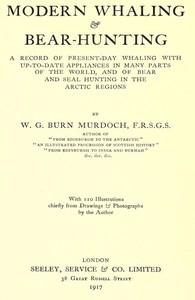
Modern Whaling & Bear-Hunting A record of present-day whaling with up-to-date appliances in many parts of the world, and of bear and seal hunting in the Arctic regions Book Summary
Published in 1889, Modern Whaling & Bear-Hunting offers a fascinating, if sometimes unsettling, glimpse into the world of late 19th-century Arctic hunting. Written by William Gordon Burn-Murdoch, the book is a product of its time, detailing the methods and technologies used to hunt whales, bears, and seals, largely for commercial gain. It's a historical document as much as a hunting guide, revealing attitudes towards wildlife and the economic drivers of exploitation.
This book meticulously documents the state of whaling and Arctic hunting in the late 1800s. It covers the different types of whaling vessels, the harpoon guns and other equipment used, the process of rendering whale oil, and the various locations around the globe where whaling was actively taking place – from the Arctic to the South Seas. Beyond whaling, it provides detailed accounts of bear and seal hunting techniques, the challenges faced by hunters in the harsh Arctic environment, and the economic importance of these hunts to the communities involved. It's filled with technical descriptions, anecdotes from hunters, and a clear sense of the industrial scale of these operations.
One of the most striking lessons from Modern Whaling & Bear-Hunting is the sheer scale of industrial whaling. The book details how whaling had moved beyond small, traditional boats to large, steam-powered vessels equipped with explosive harpoons. This technological advancement dramatically increased the efficiency of the hunt, leading to a massive increase in whale kills. Burn-Murdoch doesn’t shy away from describing the process, from the initial chase to the flensing (stripping the blubber) of the whale on the deck of the ship. This illustrates a pivotal moment in human history where technology enabled the widespread exploitation of a natural resource.
The book also reveals the economic motivations driving the hunt. Whale oil was a crucial commodity in the 19th century, used for lighting, lubrication, and in the production of various goods. The demand for whale oil fueled the relentless pursuit of these animals, often with little regard for their long-term survival. Similarly, bear and seal hunting provided valuable furs and meat, contributing to the economies of Arctic communities and international trade. Understanding these economic pressures is key to understanding the historical context of these hunts.
Furthermore, the book provides a window into the attitudes towards wildlife prevalent at the time. While some hunters expressed respect for the animals they pursued, the overall tone is one of utilitarianism – whales, bears, and seals were primarily seen as resources to be exploited for human benefit. There's a noticeable lack of concern for conservation or the potential consequences of overhunting. This perspective, while common in the 19th century, stands in stark contrast to modern conservation ethics. The detailed descriptions of the hunts, while fascinating, can be disturbing to contemporary readers precisely because of this difference in viewpoint.
Finally, the book highlights the incredible resilience and resourcefulness of the people who lived and worked in the Arctic. The hunters, ship crews, and indigenous communities faced extreme conditions – freezing temperatures, treacherous seas, and long periods of darkness. Their ability to survive and thrive in this environment is a testament to their adaptability and skill. Burn-Murdoch’s accounts, though focused on the hunt, offer glimpses into the daily lives and challenges of these individuals.
This book will appeal to readers interested in:
- Maritime History: Detailed descriptions of whaling vessels and life at sea.
- Arctic Exploration: Insights into the challenges and realities of life in the Arctic regions during the 19th century.
- The History of Technology: Examination of the tools and techniques used in whaling and hunting.
- Environmental History: A historical perspective on the exploitation of natural resources and the development of conservation ethics.
- 19th-Century Economics: Understanding the economic drivers behind the whaling industry.
Yes, this book absolutely still matters today. It serves as a crucial historical record of a period when human activity had a devastating impact on whale populations and other Arctic wildlife. Understanding the past is essential for informing present-day conservation efforts and preventing similar mistakes. The book highlights the dangers of unchecked exploitation and the importance of sustainable resource management. It also provides a valuable perspective on the evolution of human attitudes towards nature.
To further explore the consequences of whaling and the ongoing efforts to protect whale populations, I recommend reading:
| Reading on Gutenburg | Free reading |
| Get Paperback Version on Amazon | Buy a book |
| Suggest Book : Fatal Catch: The Commercialization of Tuna Book | Get on Amazon |
Modern Whaling & Bear-Hunting is a challenging but rewarding read. It’s a product of its time, and its descriptions of hunting practices can be graphic and unsettling. However, it offers a unique and valuable insight into a pivotal period in environmental history, reminding us of the consequences of unchecked exploitation and the importance of responsible stewardship of our planet’s resources.