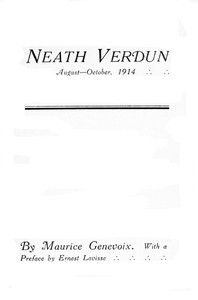
Neath Verdun, August-October, 1914 Book Summary
One of the most striking aspects of Neath Verdun is its brutal honesty about the realities of war. Barbusse doesn't shy away from depicting the sheer terror and physical devastation experienced by the soldiers. Unlike the patriotic fervor often presented, the men’s motivations aren’t abstract ideals, but a desperate desire to survive. They fight not out of glory, but out of a sense of duty, fear, and a powerful bond with their comrades. The book vividly illustrates the disconnect between the romanticized image of war and the grim reality of it, a lesson that remains profoundly relevant even today.
The concept of collective experience is central to the book’s power. By using the 'we' narration, Barbusse avoids focusing on individual heroism and instead presents the war as a shared ordeal. This technique highlights the way war obliterates individual identity, forcing men to rely on each other for survival and forging a unique sense of camaraderie born of shared trauma. The soldiers’ thoughts and feelings often blend together, creating a powerful sense of unity and a chilling portrayal of the psychological impact of prolonged combat. It demonstrates how war isn’t just fought by individuals, but by groups bound together by circumstance and suffering.
Furthermore, the book offers a scathing critique of the war’s leadership and the political ideologies that fueled it. While the soldiers fight and die in the trenches, they are largely unaware of the strategic goals or the reasons behind the conflict. They witness the incompetence of their officers and the senseless waste of life, leading to a growing disillusionment with the war effort. This critique isn't overtly political, but rather emerges organically from the soldiers’ observations and experiences. It underscores the human cost of abstract political objectives and the often-vast gulf between those who wage war and those who bear its consequences. The futility of the conflict is a constant theme, as the men repeatedly charge into impossible situations with little to no gain.
Finally, Neath Verdun powerfully demonstrates the dehumanizing effects of war. The constant exposure to violence, death, and suffering gradually erodes the soldiers’ empathy and morality. They become desensitized to the horrors around them, and their language and thoughts reflect a growing cynicism and brutality. The book doesn't portray the soldiers as villains, but rather as victims of a system that systematically strips them of their humanity. This is a stark warning about the dangers of war and its potential to corrupt even the most well-intentioned individuals.
- You're interested in a realistic, unromanticized portrayal of World War I.
- You appreciate literary experimentation and a unique narrative voice (the collective 'we').
- You want to understand the psychological impact of war on soldiers.
- You're looking for a powerful anti-war statement.
- You enjoy reading challenging and emotionally demanding literature.
| Reading on Gutenburg | Free reading |
| Get Paperback Version on Amazon | Buy a book |
| Suggest Book : All Quiet on the Western Front Book | Get on Amazon |