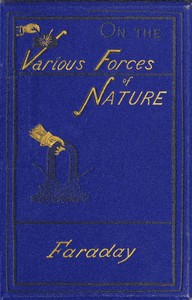
On the various forces of nature and their relations to each other Book Summary
Introduction
In the mid-19th century, as the Industrial Revolution reshaped society, scientists sought to understand the fundamental forces that governed the natural world. Among them was John Tyndall, a physicist whose work bridged the gap between laboratory science and public understanding. His book, On the various forces of nature and their relations to each other, published in 1870, offers not just a compendium of scientific facts, but a journey into the invisible workings of the universe, presented with a clarity that captivated readers of the time and continues to resonate today.
What is this book about?
Tyndall's work is a collection of his lectures and experiments exploring the fundamental forces at play in nature—forces like light, heat, electricity, magnetism, chemical affinity, and gravity. Unlike many scientific texts of the era, Tyndall wrote for a broader audience, avoiding overly technical jargon while still conveying complex concepts with remarkable clarity. He believed that understanding these forces wasn't just the domain of academics but was essential for anyone seeking to comprehend the world around them. The book delves into how these forces interact, sometimes directly and sometimes indirectly, shaping everything from the weather to the stars.
Key Lessons
One of the most striking aspects of Tyndall's book is his emphasis on the role of observation and experimentation. He wasn't just theorizing; he was actively demonstrating. For instance, his experiments with polarized light and the way certain substances—like chrysolite—interacted with it captivated his audiences. This demonstrated that the invisible could be made visible, teaching readers that science is about exploring the boundaries of the known and the unknown.
Another crucial theme is the interconnectedness of forces. Tyndall masterfully explained how seemingly separate phenomena are often linked. For example, he explored how heat and light are different manifestations of the same energy, and how magnetism and electricity are closely related. This holistic view encouraged readers to see nature as a unified system rather than a collection of isolated facts.
Furthermore, Tyndall championed the idea that nature's forces are accessible and understandable. He demystified complex concepts by relating them to everyday experiences. His explanations of why the sky is blue or how iron can be magnetized weren't just academic exercises; they were keys to unlocking a deeper appreciation of the physical world. This approach made science feel less intimidating and more relevant to everyday life.
Is this book fit for me?
This book is ideal if:
• You're interested in the history of science or 19th-century scientific thought.
• You enjoy clear, engaging writing that makes complex topics accessible.
• You want to understand how various natural forces interact and influence the world.
• You appreciate the human side of science—Tyndall's enthusiasm and storytelling make the book engaging beyond just the facts.
• You're curious about the fundamental principles that govern our universe but aren't necessarily looking for cutting-edge research.
However, it might not be the best fit if:
• You're looking for highly technical, mathematical explanations of forces.
• You prefer contemporary scientific perspectives rather than historical ones.
• You're primarily interested in the latest findings in physics rather than foundational concepts.
Does it still matter today?
Absolutely. While the specific experiments and language might be dated, the fundamental concepts Tyndall explored—light, heat, electricity, magnetism, chemical reactions, and gravity—remain the bedrock of modern physics. His emphasis on observation, experimentation, and the interconnectedness of natural forces provides a timeless framework for understanding science. Furthermore, his book serves as a valuable historical snapshot, showing how scientific knowledge evolved during the Victorian era and how scientists of the past grappled with questions that still intrigue us today. It reminds us that the curiosity and methods driving scientific progress are constant, even if the tools and theories have advanced.
Given its enduring relevance, readers interested in building a stronger foundation in how the universe works might want to explore modern physics. If this historical perspective has sparked an interest in the fundamental laws governing energy and matter, the next logical step is:
The Demon in the Machine: The Untold History of the Electrical Imagination by James Gleick
Gleick's book traces the history of electricity and magnetism from ancient times through to the present, highlighting the minds and breakthroughs that transformed these forces into technologies shaping our world. It complements Tyndall's work by showing how the foundational ideas were built upon, refined, and ultimately harnessed in ways Tyndall could only imagine.
| Reading on Gutenburg | Free reading |
| Get Paperback Version on Amazon | Buy a book |
| Suggest Book : The Demon in the Machine Book | Get on Amazon |
Conclusion
John Tyndall's On the various forces of nature and their relations to each other is more than just a historical artifact; it's a testament to the power of clear communication in science. By presenting complex physical concepts with clarity, enthusiasm, and relatable examples, Tyndall made the wonders of the natural world accessible to a wide audience. His book provides valuable context for understanding the evolution of scientific thought and offers timeless insights into the fundamental forces that shape our reality. For readers seeking to appreciate both the historical roots and ongoing relevance of physics, Tyndall's work remains a rewarding and inspiring read.