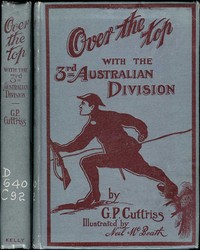
Over the Top With the Third Australian Division Book Summary
Over the Top With the Third Australian Division, written by Major W.H. Downing, is a firsthand account of the experiences of Australian soldiers during World War I, specifically focusing on the battles fought on the Western Front between 1916 and 1918. Published in 1918, it offers a raw and immediate perspective on the realities of trench warfare, moving beyond strategic overviews to focus on the daily lives, courage, and suffering of the men in the Third Division.
This book isn't a grand historical analysis of WWI. Instead, it's a collection of vignettes, anecdotes, and detailed descriptions of the Third Australian Division's involvement in key battles like the Somme, Passchendaele, and the German Spring Offensive. Downing, as a major within the division, had access to a wide range of experiences and perspectives, which he weaves together to create a compelling, if often grim, picture of life at the front. He details the planning and execution of attacks, the horrors of shellfire, the constant threat of disease, and the resilience of the Australian diggers in the face of unimaginable adversity. It's a very personal account, focusing on the men themselves – their characters, their fears, and their camaraderie.
One of the most striking lessons from Over the Top is the sheer, brutal physical and psychological toll of modern warfare. Downing doesn't shy away from describing the gruesome details of injuries, the constant fear of death, and the debilitating effects of shell shock (now known as PTSD). He illustrates how the landscape itself became a character in the war – a muddy, cratered wasteland that offered no comfort or safety. The relentless bombardment, the stench of decay, and the ever-present threat of sniper fire created an environment that fundamentally altered the men who endured it. This isn't a romanticized view of war; it's a stark portrayal of its dehumanizing consequences.
The book also highlights the importance of leadership and morale. While Downing doesn't explicitly offer a treatise on leadership, his descriptions reveal the impact of effective (and ineffective) officers on the men under their command. He emphasizes the Australian soldiers’ remarkable ability to maintain a sense of humor and camaraderie even in the most dire circumstances. This 'mateship' – a uniquely Australian concept of mutual support and loyalty – proved crucial for survival. Leaders who understood and fostered this spirit were far more successful in motivating their men to face seemingly impossible odds. Downing frequently notes the difference between officers who 'led from the front' and those who remained safely behind the lines.
Furthermore, Over the Top demonstrates the reality of war diverging significantly from public perception back home. Downing frequently contrasts the idealized image of heroism presented in newspapers with the messy, chaotic, and often pointless reality of the fighting. He shows how the grand strategic objectives often seemed distant and irrelevant to the men struggling to survive in the trenches. The book implicitly critiques the disconnect between those making the decisions and those bearing the consequences, a theme that resonates even today. The letters and conversations he recounts reveal a longing for normalcy and a growing disillusionment with the war's purpose.
Finally, the book powerfully illustrates the individual stories within the larger narrative of war. Downing doesn't treat the soldiers as anonymous masses; he gives them names, personalities, and backstories. He recounts acts of bravery, moments of despair, and the simple joys they found amidst the chaos. This focus on the individual human experience is what makes the book so emotionally resonant and enduring. He details the backgrounds of men from all walks of life, united by their service and shared hardship, reminding us that war impacts individuals profoundly.
This book is ideal for readers who:
- Are interested in firsthand accounts of World War I.
- Want a realistic, unvarnished portrayal of trench warfare.
- Appreciate character-driven narratives and individual stories.
- Are fascinated by Australian history and the experiences of the 'Anzacs'.
- Prefer a more episodic, vignette-style approach to history rather than a comprehensive strategic overview.
Yes, this book absolutely still matters today. Its exploration of the psychological trauma of war, the disconnect between political rhetoric and battlefield reality, and the importance of human connection in the face of adversity are all profoundly relevant to contemporary conflicts and societal issues. The book serves as a potent reminder of the human cost of war and the enduring impact it has on individuals and communities. Understanding the experiences of soldiers in WWI can inform our understanding of the challenges faced by veterans today and the need for comprehensive mental health support.
The next book to read would be All Quiet on the Western Front by Erich Maria Remarque. While Over the Top offers an Australian perspective, Remarque's novel provides a German viewpoint on the same conflict. Reading both allows for a more nuanced and complete understanding of the war's devastating impact on all involved, and highlights the universality of the human experience in wartime, regardless of national allegiance.
| Reading on Gutenburg | Free reading |
| Get Paperback Version on Amazon | Buy a book |
| Suggest Book : All Quiet on the Western Front Book | Get on Amazon |
Over the Top With the Third Australian Division is a powerful and moving testament to the courage, resilience, and suffering of the Australian soldiers who fought in World War I. It's a vital piece of historical literature that offers a unique and deeply personal perspective on one of the most devastating conflicts in human history. While a challenging read due to its graphic depictions of war, it is ultimately a rewarding one, providing valuable insights into the human condition and the enduring legacy of war.