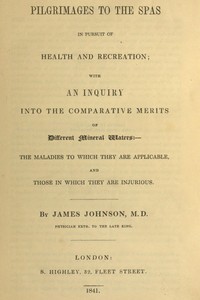
Pilgrimages to the Spas in Pursuit of Health and Recreation With an inquiry into the comparative merits of different mineral waters: the maladies to which they are applicable, and those in which they are injurious Book Summary
Pilgrimages to the Spas in Pursuit of Health and Recreation
A journey into the world of mineral waters and their purported health benefits, published in the 19th century.
Book Overview
Published in 1844, this work by John Artis explores the therapeutic properties of various European spas. It delves into the different types of mineral waters, their chemical compositions, and the specific ailments they were believed to treat. The book serves as both a guide to popular destinations and a detailed comparative analysis, examining the merits and potential drawbacks of each spa's waters.
Key Insights from the Book
The book meticulously catalogues the characteristics of numerous mineral springs across Europe, from the renowned spas of Baden-Baden and Karlovy Vary to lesser-known locales. It systematically compares the waters based on their taste, temperature, gas content (carbonation), and mineral composition.
A central theme is the medical rationale behind spa treatments. Artis investigates the specific diseases thought to be cured or alleviated by particular waters, drawing on contemporary medical knowledge. For instance, radon-rich waters were associated with treating skin conditions, while carbonated waters were believed to aid digestion and circulation. He also cautions against over-treatment and misuse, noting cases where spa therapies might be ineffective or even harmful for certain individuals or conditions.
Furthermore, the book captures the social and cultural aspects of spa-going. It describes the architecture of spa towns, the etiquette of bathing, the luxurious amenities offered, and the overall experience of seeking health and recreation in these fashionable resorts. It paints a vivid picture of a popular 19th-century pursuit combining medicine, fashion, socialisation, and tourism.
Who Should Read This Book?
- Those interested in the history of medicine, particularly the development of medical tourism and the use of natural resources for health.
- Individuals fascinated by the cultural history of 19th-century Europe, the rise of spa culture, and social customs surrounding health-seeking.
- Readers curious about the evolution of ideas regarding health, wellness, and the placebo effect, observing how treatments were rationalized in the past.
- Anyone seeking a detailed, albeit dated, guide to the perceived benefits of various mineral waters across Europe.
Enduring Relevance?
While the specific medical claims and diagnostic context of the book are outdated by modern standards, its core elements retain some interest today:
1. Historical Perspective: It offers a fascinating window into 19th-century medical beliefs, spa culture, and the social practices surrounding health and leisure. Understanding how past generations approached wellness provides valuable historical context.
2. Cultural Significance of Spas: The book highlights the enduring appeal of spa towns as destinations for relaxation, socialisation, and perceived health benefits, a concept that continues to thrive today.
3. Foundation for Modern Spa Therapy: While the medical specifics differ, the practice of using mineral water baths for therapeutic and wellness purposes still exists, albeit with a more scientifically nuanced understanding.
Nevertheless, the book itself does not provide current medical advice or reflect modern scientific understanding of the curative properties of mineral waters. Its primary value lies in its historical documentation.
| Reading on Gutenburg | Free reading |
| Get Paperback Version on Amazon | Buy a book |
| Suggest Book : Spa: A Liquid History Book | Get on Amazon |
Conclusion
John Artis's work remains a valuable resource for understanding the medical and cultural landscape of spa tourism in the 19th century. It details the specific waters, the rationales behind their use, and the societal trends of the time. While not a modern guide to health, it provides rich historical detail and context for the enduring phenomenon of spa culture and the pursuit of wellness through natural resources.