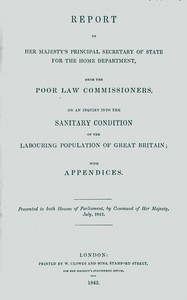
Report to Her Majesty's Principal Secretary of State For the Home Department, from the Poor Law Commissioners, on an Inquiry Into the Sanitary Condition of the Labouring Population of Great Britain; With Appendices Book Summary
A Landmark Historical Inquiry
In 1832, a group of officials known as the Poor Law Commissioners conducted an official investigation into the living conditions of Britain's laboring classes. Their findings were compiled into a comprehensive report, intended for the Home Secretary and the government. This report, examining the sanitary condition (which included poverty, health, and living conditions) of the working population, became a critical piece of social history, influencing debates on poverty, public health, and welfare systems in Britain for decades to come.
An Inquiry into Poverty and Public Health
The book is the full text of the report submitted by the Poor Law Commissioners to the British government. It details their investigation into the living conditions, health, employment, and moral state of the poor across England and Wales. The Commissioners visited factories, workhouses, rural villages, and towns, gathering evidence on issues like overcrowding, malnutrition, disease (particularly cholera), sanitation, and the effectiveness (or lack thereof) of existing Poor Laws that governed welfare. The report is characterized by its formal, often detached, bureaucratic style, but its content is a sobering account of widespread poverty and its devastating consequences.
Key Insights from the Report
The Direct Link Between Poverty and Public Health: The Commissioners meticulously documented how poverty created conditions ripe for disease. Malnutrition weakened immune systems, making people more susceptible to epidemics like cholera. Overcrowded housing, shared water sources, and inadequate waste disposal (lack of proper toilets and sewers) were identified as major contributors to outbreaks of disease among the poor. A factory worker, for example, living in a tightly packed urban slum, would face significantly higher risks of illness compared to someone in a rural cottage with better access to clean water and space.
Systemic Failures of Poor Law Administration: While acknowledging some efforts, the report criticized the existing Poor Law system. It highlighted the inflexibility and often punitive nature of workhouse relief, where the poor were offered assistance only if they were willing to accept harsh conditions and break their ties with their communities. The investigation found that local authorities often lacked the resources and understanding to effectively manage poor relief, leading to inconsistent and frequently inadequate support for those in need.
The Need for Coordinated Government Action: Based on their findings, the Commissioners argued strongly for a more systematic and centralized approach to addressing poverty and its related public health issues. They recommended specific measures, including better sanitation in urban areas, improved oversight of factory conditions (though this was less central to the report than poverty per se), and more effective, yet not necessarily state-controlled, Poor Law administration that genuinely aimed to alleviate hardship rather than merely punish it.
Overwhelming Scale of Suffering: The report powerfully conveyed the sheer scale of poverty and its impact. Detailed statistics and testimonies painted a picture of widespread hunger, disease, and desperation, challenging the complacency of the middle and upper classes. It aimed to shock and persuade policymakers into recognizing the moral and practical necessity of intervening to improve the lives of the laboring poor.
Who Should Read This Book?
This book is essential reading for:
- Students and scholars of history, particularly British social and economic history, the 19th century, and the history of social policy and welfare systems.
- Individuals interested in the origins of modern public health concerns like sanitation, hygiene, and disease prevention.
- Those studying the Industrial Revolution and the social consequences of rapid urbanization and industrialization.
- People wanting to understand the historical context behind contemporary debates about poverty, welfare, government intervention, and social inequality.
However, readers should be prepared for a dense, somewhat dry, and lengthy text with a formal, bureaucratic style. It addresses specific historical contexts and may not be the most accessible entry point for general readers unfamiliar with the era.
Enduring Relevance
Yes, this report remains incredibly relevant today. It lays bare fundamental truths that continue to resonate:
- The inextricable link between poverty, inadequate housing, and public health crises (think modern pandemics and health disparities).
- The ongoing debate about the most effective and humane ways to provide social support and manage poverty.
- The critical importance of government intervention (or lack thereof) in addressing societal problems like widespread inequality.
- The ethical questions surrounding how society treats its most vulnerable members.
Understanding the origins of these issues, even in a 19th-century context, provides invaluable perspective on the challenges we face in the 21st century.
| Reading on Gutenburg | Free reading |
| Get Paperback Version on Amazon | Buy a book |
| Suggest Book : Poverty, Work, and Families: An Economic History of Child Well-Being in America Book | Get on Amazon |
A Foundational Text
The report submitted by the Poor Law Commissioners in 1832 is more than just a historical document; it is a foundational text in the study of social policy, public health, and poverty in Britain. Its detailed findings and recommendations, though products of their time, offer profound insights into the relationship between government, society, and the individual in the face of widespread economic hardship. Reading this report provides a crucial lens through which to understand the development of modern welfare states and the enduring complexities of addressing poverty and inequality.