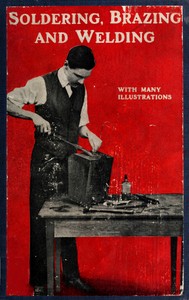
Soldering, Brazing and Welding Book Summary
Key Lessons from "Soldering, Brazing and Welding"
The book systematically breaks down the different metal joining processes:
1. Foundational Principles: It emphasizes the fundamental science - the role of heat in melting filler materials or base metals, the importance of flux to prevent oxidation, and the necessity of proper joint design for strength and integrity. Understanding these basics is crucial for any metal joining task, regardless of the specific technique used.
2. Equipment and Setup: Detailed sections cover the essential tools and apparatus for each process. This includes everything from simple soldering irons and torches to more complex setups for arc welding and oxy-fuel cutting. Learning about the correct equipment and its proper setup is vital for achieving good results and ensuring safety.
3. Technique and Skill: The book stresses that proficiency comes from practice. It describes the specific motions, control of heat (temperature), manipulation of filler materials, and the importance of creating clean, properly shaped welds or joints. Mastering these hands-on skills is central to becoming a competent metalworker. For example, the text likely explains how to hold the torch at a certain angle for oxy-fuel cutting or how to add filler metal correctly during arc welding.
4. Safety Considerations: Given the inherent dangers of working with heat, molten metals, electricity, and potentially toxic fumes, safety is a recurring theme. The book would cover protective gear (like gloves, goggles, and aprons), proper ventilation, handling of fuels and electrical equipment safely, and general workshop safety practices.
5. Material Selection and Application: While not solely focused on metallurgy, the book would guide the reader on selecting appropriate materials for different joining processes based on factors like melting points, strength requirements, and cost. It would also touch upon common applications for each technique, from joining electrical components with soldering to constructing heavy structures with welding.
Is This Book Fit For You?
If you are:
- A student or hobbyist wanting a foundational understanding of soldering, brazing, and welding principles.
- Interested in the history of industrial techniques and early technical manuals.
- Seeking clear explanations of the fundamental concepts and processes involved in metal joining.
- Willing to engage with a somewhat dated text but value its concise and practical approach.
However, note that the book's practical examples and equipment might be dated, and it lacks the depth of modern safety standards and potentially advanced techniques covered in contemporary guides.
Yes, the core principles, processes, and safety considerations covered in this book absolutely still matter today. Metal joining remains a fundamental skill in manufacturing, construction, automotive repair, electronics, and countless other fields. The basic techniques of soldering, brazing, and welding are still taught and widely used.
While the specific tools and safety standards may have evolved significantly (modern welding booths, advanced PPE, robotic welding, sophisticated welding power sources), the underlying physics of heat transfer, material melting, filler application, joint design, and the importance of practice and skill development remain unchanged. Understanding the fundamentals outlined in this book provides a solid basis for learning these critical skills in the modern context.
| Reading on Gutenburg | Free reading |
| Get Paperback Version on Amazon | Buy a book |
| Suggest Book : The Art of Joining Metals Book | Get on Amazon |
In conclusion, "Soldering, Brazing and Welding" offers a valuable historical and educational resource for understanding the basics of metal joining. While its format and examples are dated, its clear explanation of fundamental principles, processes, and safety remains relevant. For a modern perspective and deeper dive, "The Art of Joining Metals" provides updated techniques, safety standards, and broader context.