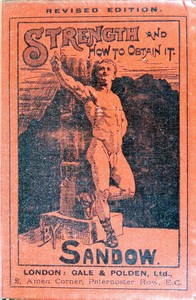
Strength and How to Obtain It Book Summary
Welcome to the Summary
This summary provides a concise and insightful overview of the book 'Strength and How to Obtain It', drawing from its content available on the provided source. We will explore its main themes, key takeaways, its potential relevance to you, and its enduring significance in today's world.
Book Overview
"Strength and How to Obtain It" is a classic text originally published in the early 20th century (originally appearing in 1910, reprinted here as part of Project Gutenberg). Authored by a likely physical culture advocate, the book delves into the principles and practical methods for developing physical strength through exercise. It's not a modern scientific treatise but rather a guide rooted in the understanding and training philosophies of its time. The book covers fundamental exercises, discusses different training methods, emphasizes proper form, diet, rest, and overall health as components of building strength, and addresses common misconceptions prevalent during its era.
Key Lessons from the Book
The book imparts several foundational ideas about strength training:
1. **Systematic Exercise:** The core principle is that strength is built through specific, progressive resistance exercises. The book details various bodyweight and器械-based exercises (like presses, pulls, squats, and bends) and emphasizes understanding the principles behind each movement to maximize effectiveness and minimize injury. It stresses that simply moving a weight isn't enough; one must target the muscles correctly and perform the movements with control.
2. **Progressive Overload:** A timeless concept explained is the necessity of gradually increasing the demand on the muscles to stimulate growth. This could involve lifting heavier weights, performing more repetitions or sets, or reducing rest periods. The book argues against plateaus, stressing that without consistent progression, strength gains halt. It serves as a precursor to the modern understanding of this principle.
3. **Importance of Form and Technique:** Emphasis is placed on performing exercises correctly, focusing on the mind-muscle connection and the full range of motion. Poor form not only wastes energy but also risks injury. The author advocates learning the 'correct way' to perform exercises, often suggesting practicing with minimal weight initially to master the movement pattern.
4. **Synergy of Diet, Rest, and Recovery:** While focused on exercise, the book recognizes that physical effort alone is insufficient. It discusses the importance of adequate nutrition to fuel workouts and repair muscle tissue, sufficient sleep and rest periods for recovery, and overall health habits (like avoiding alcohol and maintaining good posture) as crucial components for achieving and maintaining strength.
5. **Mental Attitude and Consistency:** The author highlights the significance of a determined, disciplined mindset. Success in building strength requires dedication, patience, and consistency over the long term. It's not an overnight process but one demanding persistent effort.
Who Would Find This Book Useful?
This book is particularly fitting for:
* **Individuals interested in the history of physical training:** You'll gain insight into early 20th-century approaches to fitness, exercise physiology, and training theory.
* **Beginners in strength training:** While the principles are sound, the examples and language reflect an earlier era. It can offer a simple starting point or complement more modern guides by emphasizing foundational concepts.
* **Those curious about the basics:** If you're seeking a straightforward explanation of what constitutes effective strength-building exercise and the underlying principles (like progressive overload and proper form), this book provides a clear, albeit dated, perspective.
**Less fitting for:** Those looking for cutting-edge scientific research, detailed modern workout programs, or nutrition plans based on the latest findings.
Does It Still Matter Today?
Yes, the core ideas presented in this book are still highly relevant today.
* **Fundamental Principles:** Concepts like progressive overload, the importance of proper form, the synergy of exercise with diet and rest, and the necessity of consistency are cornerstones of modern strength training. Understanding these basics is essential for anyone starting out or seeking to improve their program.
* **Historical Context:** Reading this book offers valuable historical perspective. It reveals how exercise science and equipment have evolved, and how early practitioners conceptualized strength. This can be interesting and might even inspire appreciation for classic training methods which have influenced modern approaches.
* **Simplicity and Focus:** While modern resources can be vast and complex, this book's focused approach on the 'how' of strength building (specific exercises and principles) is refreshing. It cuts through some of the noise.
**Therefore, we suggest reading a more contemporary book on strength training principles to build upon this foundation.**
| Reading on Gutenburg | Free reading |
| Get Paperback Version on Amazon | Buy a book |
| Suggest Book : Starting Strength Book | Get on Amazon |
Conclusion
"Strength and How to Obtain It" offers a foundational look at the principles of physical strength development. While its language and examples are products of its time, its core messages about targeted exercise, progressive overload, correct form, the importance of rest and nutrition, and mental discipline remain fundamentally sound. It serves as a historical snapshot and a reminder of the enduring basics of building strength. For modern application and detailed program design, pairing this book with resources like Mark Rippetoe's "Starting Strength" would provide a comprehensive understanding, bridging historical principles with contemporary practice.