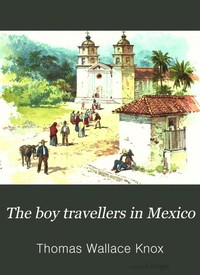
The Boy Travellers in Mexico Adventures of Two Youths in a Journey to Northern and Central Mexico, Campeachey, and Yucatan, With a Description of the Republics of Central America and of the Nicaragua Canal Book Summary
Key Lessons from 'The Boy Travellers in Mexico'
1. Observation and Curiosity Shape Understanding: The book emphasizes the value of firsthand observation and maintaining an open, curious mind when encountering unfamiliar cultures and environments. The travelers' detailed descriptions of local customs (like the market scenes or dances) and natural phenomena demonstrate how active observation can lead to a richer understanding than secondhand accounts. For example, their descriptions of Yucatan's ancient ruins or the daily life of the Maya people offer insights they gathered through direct engagement, highlighting the importance of immersive learning.
2. The Intricate Link Between Geography, History, and Culture: The narrative implicitly teaches that a region's landscape is often a product of its historical events and shapes its current culture. The travelers traverse areas scarred by past conflicts, witness the remnants of colonial architecture, and note how geography influenced trade routes and indigenous settlement patterns. This journey serves as a lesson in how physical surroundings and historical narratives are interwoven, showing readers how to read a place by understanding its past and terrain.
3. The Challenge of Accurate Representation and Ethical Travel: While not explicitly stated as a lesson, the travelers' attempts to document and interpret the cultures they encounter raise questions about representation. Their outsider perspective, combined with the common 19th-century practice of viewing indigenous peoples through a lens of 'exoticism' or 'primitivism,' invites modern readers to reflect on the subjectivity and potential biases inherent in travel writing. The book subtly serves as a case study in the limitations of an observer's understanding and the ethical considerations of representing other cultures.
4. Adaptability and Resourcefulness in Unexpected Circumstances: The travelers face numerous challenges, from logistical hurdles and political instability to personal mishaps. Their journey teaches the importance of adaptability, finding solutions with limited resources, and maintaining a sense of humor amidst difficulties. Their resilience in navigating unfamiliar territories and unfamiliar situations underscores the value of flexibility and practical ingenuity when venturing into the unknown.
Is 'The Boy Travellers in Mexico' Fit for You?
- If you are interested in 19th-century travel literature and historical accounts of Mexico and Central America.
- If you enjoy narratives with youthful energy, curiosity, and a sense of adventure.
- If you want to understand the geography and cultural context of Mexico and Central America from a historical perspective.
- If you appreciate detailed descriptions and are willing to overlook the dated perspectives common in older travelogues.
- If you have an interest in the social history of the period and the impact of events like the Reform War on local populations.
Yes, the book still matters today, primarily as a historical document and a window into the past. It offers valuable insights into the social structures, economic conditions, and political landscape of Mexico and Central America during a formative period (around the time of the Reform War and Porfirio Díaz's rise). Understanding this history is crucial for comprehending the region's subsequent development. It provides a ground-level view of the challenges and realities faced by ordinary people and travelers navigating a complex and often volatile era.
However, its direct relevance for contemporary readers seeking practical advice or a purely objective modern perspective is limited due to its age and inherent biases. The travelers' viewpoints, sometimes naive or ethnocentric, reflect the attitudes of their time.
Suggested Next Book: Mexico: From Conquest to Revolution by William H. Beezley or Porfirian Mexico: An Economic History by Alan Knight.
These modern works provide a more balanced, critical, and up-to-date analysis of Mexico's history, addressing the complexities and biases present in older accounts like Russell's. They offer a deeper understanding of the historical context that shaped the world the travelers encountered.
| Reading on Gutenburg | Free reading |
| Get Paperback Version on Amazon | Buy a book |
| Suggest Book : The Mexican Revolution: A Very Short Introduction Book | Get on Amazon |
In conclusion, 'The Boy Travellers in Mexico' is a classic piece of 19th-century travel writing that provides a vivid, albeit dated and subjective, account of a journey through a dynamic and often dangerous region. While its historical value is undeniable for understanding the period, modern readers should approach it with awareness of its limitations and consider more contemporary historical analyses to gain a fuller picture of Mexico's past and present.