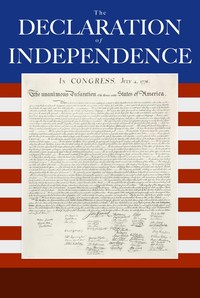
The Declaration of Independence of the United States of America Book Summary
Introduction
The Declaration of Independence is one of the most important documents in American history. Adopted by the Second Continental Congress on July 4, 1776, it declared the thirteen American colonies' separation from Great Britain. Though often called a 'Declaration', it was more than just a statement of independence; it was a philosophical treatise justifying revolution and outlining the principles upon which the new nation would be founded. This document, written primarily by Thomas Jefferson, remains a powerful statement of individual rights and government's role.
What is this book about?
The Declaration of Independence is not just a historical document; it's a foundational text expressing the colonies' decision to break away from British rule and establish a new nation based on specific principles. It begins by asserting the philosophical basis for self-government – the idea that all people are endowed with certain unalienable rights. It then lists the colonists' complaints against the British King and Parliament, detailing grievances that the colonists believed justified their separation. Finally, it formally declares the colonies to be free and independent states, severing all political ties with Great Britain. It's essentially a statement of reasons for revolution and a blueprint for the new nation's ideals.
Key Lessons
The Declaration of Independence profoundly influenced political philosophy and continues to shape our understanding of rights and government. Its first major lesson is the assertion of inalienable rights. Jefferson wrote that "all men are created equal" and are endowed by their Creator with certain unalienable Rights, including Life, Liberty and the pursuit of Happiness. This idea, borrowed from Enlightenment thinkers but powerfully articulated here, establishes that these rights exist independently of government and cannot be justly taken away. It shifts the focus from what the government can do for its citizens to what citizens inherently possess.
Second, the Declaration introduces the concept of government's legitimacy based on consent. It states that "Governments are instituted among Men, deriving their just powers from the consent of the governed." This means a government's authority comes from the people it serves, not from tradition or conquest. When a government becomes destructive of these ends – specifically, when it fails to secure the rights of the people – the people have the right to change or abolish it. This principle underpins the American Revolution and the concept of revolution itself, emphasizing the people's power to shape their own government.
Third, the document provides a powerful framework for justifying rebellion. It methodically lists the King's transgressions and the Crown's "cruelty, imperious tyranny, and arbitrary commotions" against the colonies. By detailing these abuses, the Declaration provides a clear rationale for why separation was necessary and justified. It frames the conflict not merely as a political dispute but as a defense of fundamental rights against tyranny. This careful justification was crucial for gaining both domestic support and, potentially, international recognition.
Finally, the Declaration's eloquent phrasing has had a lasting impact on democratic thought and language. Phrases like "life, liberty, and the pursuit of happiness" and "we hold these truths to be self-evident" have entered the English language and cultural consciousness. Its defense of equality, even if limited to white men at the time, planted seeds for future struggles for broader equality. It remains a benchmark for comparing governmental actions and asserting individual freedoms.
Is this book fit for me?
This concise document (originally around 1,300 words) is surprisingly accessible and offers profound insights for a wide range of readers:
- History Buffs: It's essential reading for understanding the roots of the American Republic.
- Students: Crucial for anyone studying American history, government, or political philosophy. It provides foundational concepts.
- Anyone Interested in Rights and Government: It clearly outlines the basis for many modern ideas about individual liberties and the social contract.
- Seekers of Inspiration: Its powerful language and ideas about freedom and justice can be deeply moving and thought-provoking.
- English Language Learners: Its relatively simple, impactful structure makes it a good text for language study.
While brief, its significance and the ideas it presents make it a valuable read regardless of your background.
Does it still matter today?
Absolutely, the Declaration of Independence remains profoundly relevant in the 21st century. Its core ideas about individual rights, equality, and government accountability continue to be central to discussions about American society and politics.
The Declaration's assertion of unalienable rights, particularly life, liberty, and the pursuit of happiness, continues to inspire movements fighting for civil rights, social justice, and personal freedoms. Debates about the role of government, the balance between individual liberties and collective security, and the meaning of equality often echo the philosophical arguments found in the Declaration.
Furthermore, its explicit statement that "whenever any Form of Government becomes destructive of these ends," the people have the right to change or abolish it, provides a foundational justification for demands for governmental reform and revolution in thought, if not action. It reminds us that the government's purpose is to secure rights, and when it fails, the people's trust is shaken.
Understanding the Declaration helps us navigate contemporary issues by grounding our understanding in the principles upon which the nation was supposedly founded. It forces us to confront whether current interpretations and practices align with those founding ideals.
| Reading on Gutenburg | Free reading |
| Get Paperback Version on Amazon | Buy a book |
| Suggest Book : <div class="container"><div class="card"><div class="card-body"><h5 class="card-title">Suggest Book Title</h5><p>The Federalist Papers</p></div></div></div></div> Book | Get on Amazon |
Conclusion
The Declaration of Independence is far more than just a document signed in 1776. It's a foundational text that articulated the philosophical basis for a new nation built on principles of individual rights, government by consent, and the people's right to self-governance when their rights are threatened. Though its language and context are rooted in history, its core ideas – about human rights, equality, and the nature of legitimate government – remain central to understanding American identity, politics, and society today. Reading it offers not just historical insight, but a powerful reminder of the enduring struggles for freedom and justice that continue to shape our world.