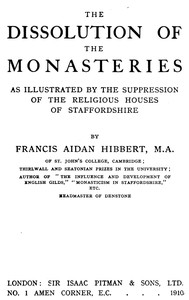
The dissolution of the monasteries Book Summary
Book Summary: The Dissolution of the Monasteries
Welcome to a detailed summary of "The Dissolution of the Monasteries," a historical account exploring one of the most significant events in English history—the systematic closure and confiscation of monastic institutions ordered by King Henry VIII in the 16th century. This summary will guide you through the core events, the motivations behind them, the profound consequences they had on English society, and their lasting legacy.
Book Overview
"The Dissolution of the Monasteries" delves into the political, religious, and social upheaval surrounding Henry VIII's decision to break away from the Roman Catholic Church and establish the Church of England. Central to this narrative is Henry's need for a male heir and his personal rift with Pope Clement VII, stemming from his desire to annul his marriage to Queen Catherine of Aragon. The book meticulously details the legislative and executive actions taken to dissolve monasteries, priories, colleges, and chantries across England, Wales, and Ireland. It examines the motivations—both personal and political—and the far-reaching effects on religious life, land ownership, the nobility, and the common people. The author typically provides context about the existing monastic system, the Tudor court, and the religious tensions of the period to fully illuminate this transformative period in English history.
Key Lessons and Insights
This book offers several crucial lessons about power, religion, and societal change.
Firstly, it demonstrates the immense political power vested in religious institutions and the consequences when that power is deliberately dismantled from above. Henry VIII's actions show how religious reform, even when ostensibly driven by faith, can become a tool for consolidating royal authority and addressing dynastic needs. The dissolution wasn't just about religious change; it was fundamentally about redistributing wealth and land to strengthen the Crown and its allies.
Secondly, the book highlights the devastating impact of religious upheaval on communities. Monasteries were not just places of worship; they were often the heart of local communities, providing education, charity, healthcare, and refuge. Their dissolution left many communities bereft and significantly altered the social fabric. The fate of the monastic lands—often sold to the highest bidder, frequently the nobility—also underscores the economic motivations behind religious change and the creation of new social hierarchies.
Thirdly, it serves as a case study in propaganda and narrative control. The Crown actively promoted the dissolution as liberating England from papal control and enriching the nation, while suppressing dissent. Understanding the motivations behind the narrative presented by those in power is a key takeaway, relevant beyond just the Tudor period.
Is This Book Fit For Me?
This book is ideal if you are interested in:
- Early modern English history, particularly the Tudor period and the reign of Henry VIII.
- The English Reformation and its complexities beyond just the break from Rome.
- The intersection of religion, politics, and economics in history.
- The social and cultural history of England, focusing on the role of monastic life.
- Understanding significant periods of upheaval and institutional change.
It assumes a basic understanding of the medieval and early Tudor periods but provides sufficient context for readers coming to the topic. It's well-researched and suitable for both casual readers and those with a more academic interest in the subject.
Does It Still Matter Today?
Yes, absolutely. The Dissolution of the Monasteries remains profoundly relevant today for several reasons.
Firstly, it represents a landmark moment in the history of the separation of church and state, demonstrating how religious affiliation can be weaponized for political and personal gain. The conflict between religious conviction (or lack thereof) and political power continues to resonate in contemporary debates.
Secondly, it serves as a stark reminder of the socio-economic consequences of large-scale institutional change. The redistribution of wealth and land, the impact on local communities, and the alteration of social structures have parallels in various modern contexts, including privatization, nationalization, and significant policy shifts.
Thirdly, it offers insights into the enduring power of religious institutions and the human tendency towards religious fervor, conflict, and schism. Understanding past religious wars and reforms helps contextualize similar dynamics in the present.
Therefore, it strongly suggests reading "The Reformation: A History" by Diarmaid MacCulloch. This comprehensive work provides a broader perspective on the Reformation across Europe, placing Henry VIII's actions within the wider religious and intellectual currents of the 16th century, deepening the understanding gained from reading about the English-specific dissolution.
| Reading on Gutenburg | Free reading |
| Get Paperback Version on Amazon | Buy a book |
| Suggest Book : The Reformation: A History Book | Get on Amazon |
Conclusion
"The Dissolution of the Monasteries" offers a compelling exploration of a pivotal moment in English history. It goes beyond the well-known story of Henry VIII's break with Rome to reveal the intricate web of political ambition, religious fervor (or its absence), and economic calculation that shaped this era. The book underscores the profound and lasting impact of these dissolution policies on English society, economy, and religion, demonstrating how actions taken for specific political or personal reasons can reshape a nation for centuries to come. It stands as a testament to the complex interplay between power and faith, providing valuable historical context that remains highly relevant today.