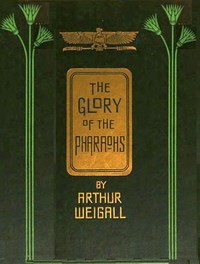
The glory of the Pharaohs Book Summary
Introduction
Explore the ancient wonders of Egypt through this classic work that delves into the lives, achievements, and mysteries of the pharaohs. Journey back to a civilization that shaped art, governance, and spirituality long before recorded history.
What is this book about?
\'The Glory of the Pharaohs\' provides a comprehensive overview of ancient Egyptian civilization, spanning from the unification of Upper and Lower Egypt around 3100 BCE to the end of the Ptolemaic dynasty in 30 BCE. The book chronicles the rise and fall of pharaonic rule, detailing the political structures, religious beliefs, artistic expressions, technological innovations, and daily life of the Egyptians. It examines the grandeur of the pharaohs, their monumental architectural achievements like the pyramids and temples, their advancements in medicine and mathematics, and their complex cosmology centered around the god Horus and the pharaoh as divine intermediary. The work aims to present a holistic picture of this fascinating civilization and its enduring legacy.
Key Lessons
One central theme explored is the concept of divine kingship. The book emphasizes how the pharaohs were perceived not just as rulers but as living gods, embodying Horus and serving as the intermediary between the gods and the people. This divine status allowed them to control vast resources and direct monumental construction projects, from irrigation systems vital for agriculture to the colossal funerary monuments ensuring their journey into the afterlife. Understanding this connection between religion, power, and architecture is crucial to grasping Egyptian society.
Another significant lesson concerns the importance of order and stability in ancient Egyptian governance. Known as Ma\'at, the concept represented truth, balance, and cosmic order. The pharaoh\'s primary duty was to maintain Ma\'at, which was achieved through centralized control, strict social hierarchy, elaborate bureaucracy, and the enforcement of laws. Deviations from this order, symbolized by chaos (Isfet), were actively suppressed, highlighting the Egyptians\' deep-seated belief in societal stability as paramount.
The book also sheds light on the Egyptians\' practical ingenuity and scientific curiosity. From their mastery of irrigation and surveying (crucial for the Nile\'s annual flooding and land management) to their advancements in medicine (including dentistry and surgical techniques) and their early use of mathematics and astronomy (for construction and calendar keeping), the text showcases a civilization that valued empirical knowledge and applied it systematically. This pragmatic approach to problem-solving laid foundations for later developments in these fields.
Furthermore, the narrative reveals a profound cultural continuity over millennia. Despite periods of foreign domination (like the Hyksos or Persians), Egyptian civilization maintained its core religious beliefs, artistic conventions, and social structures, demonstrating remarkable resilience and a powerful sense of cultural identity that persisted even through adversity. This longevity offers insights into the factors that can sustain a culture over vast stretches of time.
Is this book fit for me?
If you are interested in ancient world history, particularly the rise of early civilizations, or fascinated by the achievements and mysteries of ancient Egypt, this book is likely for you. It is suitable for readers with little to no prior knowledge of the subject, as it provides a chronological overview. You will find it engaging if you appreciate detailed descriptions of historical events, cultural practices, and monumental achievements. The book offers insights into governance, religion, and daily life that provide a window into a very different world, making it valuable for anyone seeking to understand the foundations of Western civilization and the development of human societies.
Does it still matter today?
Yes, absolutely. Understanding ancient Egypt remains highly relevant. The concepts of divine leadership, the pursuit of order, and the engineering marvels achieved with limited technology continue to fascinate and provoke thought. The book helps modern readers appreciate the roots of architectural aesthetics, the importance of organized governance, and the human need for meaning and order. It provides context for our own cultural narratives and highlights how ancient societies solved problems that still face humanity today. The study of Egyptian civilization enriches our understanding of our shared human heritage.
| Reading on Gutenburg | Free reading |
| Get Paperback Version on Amazon | Buy a book |
| Suggest Book : Imperium: The World of Ancient Rome Book | Get on Amazon |
Conclusion
\'The Glory of the Pharaohs\' offers a captivating journey into one of history\'s most enduring civilizations. By exploring the divine kingship, the quest for order, technological ingenuity, and cultural resilience of the pharaohs, it provides invaluable insights into the formative stages of human civilization and its lasting impact on our world. This book serves as an essential starting point for anyone seeking to understand the foundations of governance, culture, and achievement. Tags : Archaeology History - General