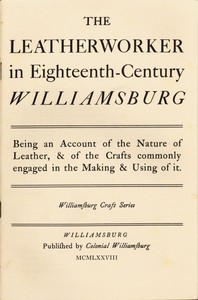
The Leatherworker in Eighteenth-Century Williamsburg Being an Account of the Nature of Leather, & of the Crafts Commonly Engaged in the Making & Using of It. Book Summary
Introduction
This summary explores the book "The Leatherworker in Eighteenth-Century Williamsburg," which delves into the craft of leatherworking during the colonial period in America. The book examines the material properties of leather and the various techniques employed by artisans to transform animal hides into essential goods of daily life. Through detailed descriptions and illustrations, it reconstructs the practical knowledge and skills required by leatherworkers of that era, offering valuable insights into the industrial and cultural landscape of eighteenth-century colonial America.
What is this book about?
"The Leatherworker in Eighteenth-Century Williamsburg" is a detailed study focusing on the craft of leatherworking during the colonial period in America. The author, based on extensive research and practical reconstruction, details the processes involved in preparing raw hides,鞣软 tanning, and finishing leather. The book covers the types of leather used, the tools necessary for the trade, and the specific techniques employed by artisans to create items such as belts, shoes, book bindings, and harnesses. It reconstructs the practical knowledge of eighteenth-century leatherworkers, shedding light on their skills, the tools of their trade, and the products they produced, all within the context of Williamsburg and colonial Virginia society.
Key Lessons
One of the primary takeaways is the intricate process of transforming raw animal hide into usable leather. This wasn't a simple task but involved several stages: skinning, fleshing (removing the flesh from the hide), liming (softening the hide), tanning (permanently preserving and softening the hide, often using alum or other natural substances), and finally, coloring and finishing to achieve desired textures and appearances. The book meticulously details these steps, highlighting the specialized knowledge required.
Secondly, the book emphasizes the importance of tools. Leatherworking relied on a specific set of tools – knives, scrapers, awls, leather snappers, lasts (forms for shaping boots), and specialized implements for tasks like stamping or toothing (creasing). Mastering the use of these tools was fundamental to the craft, and the book explains how each tool contributed to different stages of leather production.
A third key lesson concerns the variety of products made. Leather was ubiquitous in colonial life, and the book showcases the diverse range of items produced: everything from everyday accessories like belts and pouches to more substantial items such as shoes, saddles, harnesses, book bindings, and decorative trimmings for clothing. Each product required specific techniques and attention to detail.
Furthermore, the book highlights the intersection of craft and society. Leatherworking was a vital trade, contributing significantly to the economy. It was often passed down through families, requiring both physical skill and an understanding of animal hides and tanning processes. The book also touches upon the use of specific types of animal hides (like deer, cattle, and horse) and how regional availability influenced practices.
Finally, the work serves as a testament to historical craftsmanship. By reconstructing these processes, the author demonstrates the depth of knowledge held by past artisans and offers a tangible connection to the material culture of the eighteenth century, reminding us of the labor-intensive nature of creating everyday objects.
Is this book fit for me?
This book is ideal for individuals interested in colonial American history, material culture, or historical crafts and trades. If you are a history enthusiast, particularly focused on the social or economic aspects of the colonial era, this book provides valuable insights into an essential industry. Craftspersons, blacksmiths, or anyone involved in historical reenactment or living history will find the detailed descriptions of tools, techniques, and processes incredibly useful. Students of archaeology or anthropology may also appreciate the information on how leather artifacts were made and used. Essentially, if you seek to understand the practical skills and economic role of artisans in eighteenth-century America, this book is a valuable resource.
Does it still matter today?
Absolutely. The study of historical crafts like leatherworking remains relevant today for several reasons. Firstly, it provides a deeper understanding of our material heritage and the history of everyday objects, fostering a greater appreciation for the skills and labor involved in production, past and present. Secondly, the techniques and knowledge detailed in the book are directly applicable to modern leatherworking, conservation, and restoration efforts. Understanding historical methods informs contemporary craft practices, allowing for authenticity and skill development. Thirdly, examining the economic role of trades in the past offers parallels and contrasts with modern economies, highlighting the enduring importance of skilled labor and craftsmanship. Finally, it connects us to our roots, reminding us of the practical skills our ancestors possessed.
Given its direct relevance to understanding historical techniques and appreciating craft, the suggested next book is:
suggest_book: "The Book of Leather"
This book is suggested because it offers a more contemporary perspective on leatherworking, building upon historical knowledge but focusing on modern techniques, materials, and artistic approaches. It complements the historical focus of the Williamsburg book by showing how those foundational skills have evolved and been adapted today.
| Reading on Gutenburg | Free reading |
| Get Paperback Version on Amazon | Buy a book |
| Suggest Book : The Book of Leather Book | Get on Amazon |
Conclusion
"The Leatherworker in Eighteenth-Century Williamsburg" offers a fascinating and meticulously researched look into a vital craft of the colonial past. By detailing the processes, tools, and products associated with leatherworking, it provides invaluable insights into the daily lives, economic activities, and practical skills of people in eighteenth-century America. It serves as both a historical document and a practical guide for those interested in craft, history, or material culture. The knowledge contained within its pages remains relevant, informing our understanding of the past and inspiring contemporary craft practices. For those seeking a deeper dive into craft history, "The Book of Leather" offers a complementary modern perspective. Tags : Engineering & Construction History - American