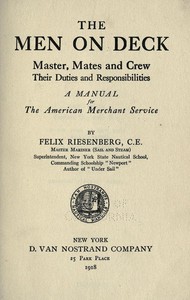
The Men on Deck: Master, Mates and Crew, Their Duties and Responsibilities Book Summary
Introduction
Step aboard any ship and you'll find a complex ecosystem of roles, responsibilities, and procedures. Understanding this hierarchy and the duties of each member of the crew is not just important for smooth operation; it's fundamental to safety at sea. 'The Men on Deck: Master, Mates and Crew, Their Duties and Responsibilities' delves deep into this world, offering a detailed guide that was originally intended as a training manual for those entering maritime careers. This summary explores its contents, significance, and enduring relevance.
What is this book about?
Published in the early 20th century, this book serves as a comprehensive manual outlining the structure of a traditional merchant ship's deck department. It meticulously details the roles, authority, and specific duties of the Master (skipper), the officers (Mates), and the various enlisted crew members. The text emphasizes the importance of clear communication, following orders, watchkeeping protocols, navigation, cargo handling, maintenance, safety drills, and the overall chain of command that keeps a vessel operational and safe. It provides practical guidance on how each role contributes to the ship's mission, from navigation and engineering oversight to cargo stowage and passenger comfort (if applicable).
Key Lessons
The Hierarchy and Chain of Command: The book clearly establishes the importance of the ship's organizational structure. The Master holds ultimate responsibility, delegating authority down to the able-bodied seamen. Each role has defined duties, and the smooth functioning of the vessel depends on everyone understanding their place within this hierarchy and adhering strictly to their responsibilities. Failure at any level can cascade into serious consequences. For example, a Mate failing to properly brief the watch might lead to navigational errors.
Defined Roles for Safety and Efficiency: Every crew member, from the experienced Master to the newest recruit, has a specific set of tasks. These range from steering the ship and handling lines to maintaining equipment and ensuring safety protocols are followed. The book stresses that overlapping or unclear duties can lead to confusion and mistakes, potentially endangering the ship and its personnel. Understanding one's exact station bill and watch schedule is presented as critical.
Emphasis on Procedures and Rules: Beyond just describing roles, the book underscores the importance of strict adherence to maritime regulations, company procedures, and established best practices. This includes watchstanding routines, cargo handling instructions, safety drills, and emergency protocols. It highlights that experience and training are built upon a foundation of consistently following the rules, even when things seem routine.
Communication is Key: Effective communication is woven throughout the lessons. The Master relies on the Mates for navigation and deck management, who in turn rely on the bosuns and officers for crew management and maintenance. Clear, concise communication during watch changes, maneuvers, and in case of emergencies is presented as non-negotiable for coordination and safety. Miscommunication was historically a major cause of maritime incidents.
The Importance of Seamanship: The book champions the time-honored skills and knowledge of traditional seamanship. It emphasizes practical experience, understanding tides, weather, knots, lines, and machinery, alongside theoretical knowledge. True seamanship is portrayed as a blend of book learning, practical skill, and judgment gained through years at sea.
Is this book fit for me?
This book is particularly valuable for:
- Individuals pursuing or currently engaged in a maritime career (Deck officers, engineers, ratings, or cadets) seeking foundational knowledge.
- Maritime historians and enthusiasts interested in the workings of early 20th-century merchant shipping.
- Students of naval architecture or maritime studies needing insight into operational procedures.
- Anyone wanting to understand the organizational principles and safety culture of a traditional merchant vessel.
Does it still matter today?
Absolutely. While modern ships incorporate advanced technology, sophisticated navigation systems, and international regulations like the International Maritime Organization's standards, the core principles outlined in this book remain fundamentally relevant. Understanding the deck hierarchy, defined roles, procedures, communication, and seamanship is still essential for safe and efficient operations at sea. The book provides a historical baseline that helps appreciate how these principles have evolved, but the underlying need for clear responsibility, defined duties, and rigorous training persists in the maritime industry.
| Reading on Gutenburg | Free reading |
| Get Paperback Version on Amazon | Buy a book |
| Suggest Book : The Life of Captain James Cook Book | Get on Amazon |
Conclusion
'The Men on Deck' offers a valuable glimpse into the disciplined world of traditional maritime operations. It serves as both an educational resource for aspiring seafarers and a historical document detailing the bedrock principles of ship management. While the specific technologies and regulations may have changed, the book's enduring lessons on responsibility, procedure, communication, and seamanship remain central to the safe and effective operation of any vessel upon the high seas. Understanding this foundational knowledge provides a deeper appreciation for the complexities and dangers of life at sea.