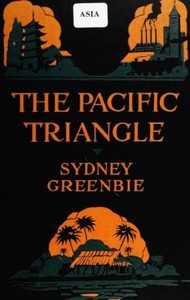
The Pacific Triangle Book Summary
The Pacific Triangle by Sydney Greenbie is a historical and geopolitical analysis of the Pacific region, focusing on the interactions and conflicts between the United States, Japan, and China. Greenbie's work, published in 1921, is a product of its time, reflecting the early 20th-century perspectives and concerns about the balance of power in the Pacific.
The Pacific Triangle provides a comprehensive examination of the political, economic, and social dynamics in the Pacific region, with a particular focus on the United States, Japan, and China. Greenbie explores the historical context, cultural differences, and strategic interests that have shaped the relationships between these nations. He also discusses the potential for conflict and cooperation in the region, offering insights into the complex interplay of power and diplomacy.
- Historical Context: The book emphasizes the importance of understanding the historical background of the Pacific region, including the colonial legacies and the rise of Japan as a major power. Greenbie provides detailed accounts of events such as the Russo-Japanese War and the Boxer Rebellion to illustrate the shifting power dynamics.
- Cultural Differences: Greenbie highlights the cultural differences between the Western nations and the East, particularly focusing on Japan and China. He discusses how these differences have influenced diplomatic relations and mutual perceptions.
- Strategic Interests: The author examines the strategic interests of the United States, Japan, and China in the Pacific, including territorial ambitions, economic interests, and military strategies. He explores how these interests have led to both cooperation and conflict.
- Potential for Conflict: Greenbie warns of the potential for conflict in the Pacific, particularly between the United States and Japan. He discusses the naval arms race and the competition for resources and influence in the region.
- Diplomacy and Cooperation: Despite the potential for conflict, Greenbie also explores the possibilities for diplomacy and cooperation. He discusses the role of international organizations and treaties in maintaining peace and stability in the Pacific.
This book is fit for readers interested in the historical and geopolitical dynamics of the Pacific region, particularly the interactions between the United States, Japan, and China. It is suitable for those who want to understand the early 20th-century perspectives on these issues and the historical context that shaped modern relations.
- Readers will find detailed historical accounts of key events in the Pacific.
- The book provides insights into the cultural and strategic factors influencing international relations.
- It offers a nuanced view of the potential for both conflict and cooperation in the region.
Yes, The Pacific Triangle still matters today because it provides valuable historical context for understanding the current geopolitical dynamics in the Pacific region. The issues of power balance, cultural differences, and strategic interests discussed by Greenbie are still relevant in contemporary international relations. However, readers should be aware that the book reflects the perspectives and biases of its time, and some of its predictions and analyses may not align with modern realities.
| Reading on Gutenburg | Free reading |
| Get Paperback Version on Amazon | Buy a book |
| Suggest Book : The Clash of Civilizations and the Remaking of World Order by Samuel P. Huntington Book | Get on Amazon |
The Pacific Triangle is a valuable historical resource for understanding the early 20th-century dynamics in the Pacific. While it provides important insights into the relationships between the United States, Japan, and China, readers should approach it with an awareness of its historical context and potential biases. For a more contemporary analysis of global conflicts and cultural dynamics, The Clash of Civilizations and the Remaking of World Order by Samuel P. Huntington is a recommended read.