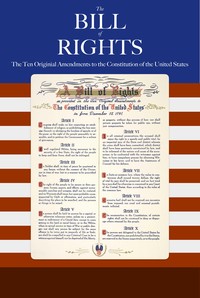
The United States Bill of Rights The Ten Original Amendments to the Constitution of the United States Book Summary
The United States Bill of Rights is the first ten amendments to the United States Constitution, which were ratified in 1791. These amendments guarantee essential rights and civil liberties, such as the right to free speech, the right to bear arms, and the right to a fair trial, as well as reserving rights to the people and the states. The Bill of Rights plays a central role in American law and government and remains a symbol of the freedoms and culture of the nation.
This book is a transcription of the original text of the Bill of Rights, including the first ten amendments to the U.S. Constitution. It provides the exact wording of these amendments, which are foundational to American civil liberties and legal principles. The amendments address various rights and freedoms, such as freedom of religion, speech, and the press, as well as protections against unreasonable searches and seizures, and the right to a speedy and public trial.
- First Amendment: Protects freedom of religion, speech, press, assembly, and the right to petition the government. For example, it allows individuals to practice their religion freely and to criticize the government without fear of retribution.
- Second Amendment: Protects the right to keep and bear arms. This is often interpreted as the right to own firearms for self-defense and other lawful purposes.
- Third Amendment: Prohibits the quartering of soldiers in private homes without the owner's consent. This was a direct response to British practices during the colonial period.
- Fourth Amendment: Protects against unreasonable searches and seizures. It requires that warrants be issued only upon probable cause and that they specifically describe the place to be searched and the persons or things to be seized.
- Fifth Amendment: Provides protections for individuals accused of crimes, including the right to a grand jury, protection against double jeopardy and self-incrimination, and the right to due process of law. It also includes the Takings Clause, which requires just compensation for property taken for public use.
- Sixth Amendment: Guarantees the right to a speedy and public trial by an impartial jury, the right to be informed of the charges, the right to confront witnesses, and the right to legal counsel.
- Seventh Amendment: Provides for the right to a jury trial in certain civil cases, according to common law.
- Eighth Amendment: Prohibits excessive bail, excessive fines, and cruel and unusual punishments.
- Ninth Amendment: States that the enumeration of certain rights in the Constitution does not deny or disparage others retained by the people.
- Tenth Amendment: Reserves powers not delegated to the federal government to the states or the people.
This book is fit for anyone interested in understanding the foundational rights and liberties that are protected by the U.S. Constitution. It is particularly useful for students, historians, legal professionals, and anyone seeking to understand the origins and text of the Bill of Rights.
Yes, the Bill of Rights still matters today. It is a living document that continues to shape American law and society. The rights and protections it guarantees are central to the functioning of American democracy and the protection of individual freedoms. For those interested in further exploring the impact of the Bill of Rights, I recommend reading Living Originalism by Jack M. Balkin, which discusses how the Constitution's original meaning can be adapted to modern circumstances.
| Reading on Gutenburg | Free reading |
| Get Paperback Version on Amazon | Buy a book |
| Suggest Book : Living Originalism Book | Get on Amazon |
The United States Bill of Rights remains a cornerstone of American democracy, enshrining fundamental rights and freedoms that are essential to the nation's identity. Its principles continue to be relevant and are actively debated and interpreted in the context of modern society. Understanding these amendments is crucial for anyone interested in American history, law, or politics.