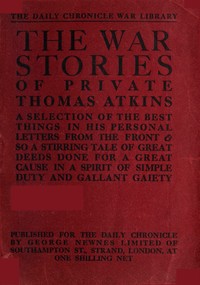
The War Stories of Private Thomas Atkins Book Summary
Published in 1916, The War Stories of Private Thomas Atkins is a fascinating, though often unsettling, collection of anecdotes and observations purportedly gathered from real British soldiers fighting in World War I. Written by Pte. Thomas Atkins (a pseudonym used to represent the common soldier), the book offers a raw and unfiltered glimpse into the trenches, far removed from the patriotic fervor and official reports of the time. It's a work of composite storytelling, meaning the 'Atkins' we read is a blend of many experiences, aiming to capture the overall spirit and realities of the war.
The book isn't a linear narrative of battles or strategy. Instead, it's a series of short, often darkly humorous, stories told from the perspective of Private Atkins. These stories cover a wide range of experiences: the boredom and monotony of trench life, the horrors of combat, the interactions with officers, the treatment of the wounded, the scavenging for supplies, and the complex relationships between soldiers. It focuses heavily on the everyday realities, the slang, the fears, and the coping mechanisms of the average British 'Tommy' during the conflict. It's a study in morale, disillusionment, and the psychological toll of modern warfare.
One of the most striking lessons from The War Stories of Private Atkins is the profound disconnect between the romanticized image of war and its brutal reality. Atkins’ tales are filled with mud, rats, constant fear, and the casual acceptance of death. There’s little glory to be found, and the stories often highlight the incompetence or indifference of the officer class. For example, stories detailing inadequate supplies or poorly planned offensives demonstrate how the men on the front lines suffered due to decisions made far from the trenches. This challenges the notion of a noble and heroic war, presenting instead a picture of senseless suffering and bureaucratic failings.
The book also powerfully illustrates the importance of camaraderie and dark humor as coping mechanisms in the face of unimaginable trauma. Soldiers rely on each other for survival, sharing food, stories, and a cynical outlook that allows them to endure. The frequent use of slang and irreverent jokes isn’t a sign of disrespect, but a way to maintain sanity and distance themselves from the horrors surrounding them. Atkins recounts numerous instances of soldiers teasing each other even under fire, or sharing small comforts, highlighting the bonds forged in adversity. This demonstrates the human need for connection and levity, even in the darkest of times.
Furthermore, the stories reveal the pervasive sense of disillusionment and loss of faith in traditional authority. The sheer scale of the carnage and the apparent futility of the fighting lead many soldiers to question the motives of those leading the war. Atkins’ narratives often subtly critique the political and social structures that allowed the conflict to continue, and the unquestioning patriotism that fueled it. The cynicism expressed towards politicians and the upper classes is a recurring theme, showing how the war eroded trust in established institutions. This is not overt political commentary, but rather the natural consequence of witnessing such widespread devastation.
Finally, the book underscores the psychological impact of war, even if it doesn't use modern psychological terminology. The constant exposure to death, the lack of sleep, and the ever-present danger take a heavy toll on the soldiers’ mental state. Stories of shell shock (now known as PTSD), nightmares, and emotional detachment are common, revealing the invisible wounds of war. Atkins doesn’t shy away from depicting the fragility of the human psyche under extreme stress, offering a poignant reminder of the lasting consequences of conflict.
This book is ideal for readers interested in:
- World War I history: Provides a unique, ground-level perspective on the war.
- Social history: Offers insights into the lives, language, and attitudes of British soldiers.
- War literature: A valuable companion to more famous war poems and novels.
- Psychology of war: Explores the emotional and mental toll of combat.
- Unflinching realism: Doesn't shy away from the harsh realities of trench warfare.
Be warned: the language and attitudes reflect the time period and can be offensive to modern sensibilities. It's also a bleak and often depressing read.
Yes, absolutely. Despite being over a century old, the themes explored in The War Stories of Private Atkins remain profoundly relevant. The disillusionment with authority, the psychological scars of war, the importance of camaraderie, and the gap between political rhetoric and lived experience are all issues that continue to resonate in contemporary conflicts. The book serves as a powerful reminder of the human cost of war and the enduring need for peace. Understanding the experiences of soldiers in WWI can inform our understanding of modern warfare and the challenges faced by veterans today.
Next book: All Quiet on the Western Front by Erich Maria Remarque. Remarque's novel, written from the perspective of a German soldier, provides a complementary and equally devastating account of the war. Reading both books allows for a more nuanced and comprehensive understanding of the conflict, moving beyond national narratives to focus on the shared human experience of suffering and loss.
| Reading on Gutenburg | Free reading |
| Get Paperback Version on Amazon | Buy a book |
| Suggest Book : All Quiet on the Western Front Book | Get on Amazon |
The War Stories of Private Thomas Atkins is a challenging but ultimately rewarding read. It’s a vital piece of historical documentation and a powerful testament to the resilience and suffering of the common soldier. While not a comfortable book, it’s a necessary one for anyone seeking to understand the true cost of war and the enduring impact it has on the human spirit.