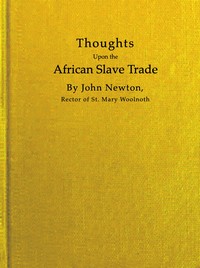
Thoughts upon the African slave trade Book Summary
The Dehumanization of Slavery: Equiano’s most potent lesson is the sheer, systematic dehumanization inherent in the slave trade. He doesn’t just describe physical abuse – though that is vividly portrayed – but the stripping away of identity, family, culture, and basic human rights. He recounts instances where enslaved people were treated as mere property, bought and sold like livestock, and subjected to arbitrary violence. This wasn’t simply ‘bad treatment’; it was a deliberate attempt to break the spirit and deny the humanity of an entire people. He emphasizes the emotional and psychological toll, showing how slavery fractured families and created a constant state of fear and uncertainty.
The Economic Interdependence of Slavery: Equiano painstakingly reveals how deeply interwoven the British economy was with the slave trade. He details the roles of merchants, shipbuilders, planters, and even seemingly unrelated industries – like textiles and sugar refining – in benefiting from the exploitation of enslaved Africans. He doesn’t present slavery as a fringe activity but as a central pillar of British prosperity. This is a crucial point because it challenges the notion that abolition would be economically ruinous, a common argument used by pro-slavery advocates. He demonstrates that the wealth generated by slavery was concentrated in the hands of a few, while the broader society was complicit through its consumption of slave-produced goods.
The Power of Personal Narrative: Before the widespread use of photography and film, personal narratives like Equiano’s were incredibly powerful tools for social change. By sharing his own story, he humanized the enslaved and forced readers to confront the reality of their suffering. He wasn’t speaking as an abstract reformer, but as a man who had *lived* through the horrors he described. This direct connection to experience made his arguments far more compelling than any theoretical treatise could have been. The book’s success is a testament to the ability of individual stories to challenge prevailing ideologies and inspire empathy.
The Hypocrisy of Christian Justifications: Equiano directly confronts the use of religion to justify slavery. He points out the glaring contradiction between the Christian teachings of love, compassion, and the inherent dignity of all human beings, and the brutal reality of the slave trade. He argues that those who claimed to be acting in accordance with God’s will were, in fact, perverting Christian principles to serve their own selfish interests. This critique was particularly effective in a society where religious belief was widespread and highly valued.
- History Buffs: If you're interested in the history of the transatlantic slave trade, the abolitionist movement, or 18th-century Britain, this book is essential reading.
- Those Seeking First-Hand Accounts: Equiano's autobiography provides a rare and invaluable perspective from someone who experienced slavery firsthand.
- Readers Interested in Social Justice: The book's themes of human rights, equality, and the fight against oppression remain highly relevant today.
- Students of Literature: It's a significant work of early African American literature and a powerful example of persuasive writing.
| Reading on Gutenburg | Free reading |
| Get Paperback Version on Amazon | Buy a book |
| Suggest Book : The New Jim Crow: Mass Incarceration in the Age of Colorblindness Book | Get on Amazon |