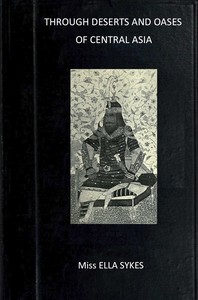
Through deserts and oases of central Asia Book Summary
Browne's work reveals Central Asia not as a monolithic entity, but as a dynamic crossroads where diverse cultures intermingled and influenced each other:
1. Historical Significance as a Crossroads: The book emphasizes that Central Asia's strategic position on the ancient Silk Road made it a crucible of exchange. Goods, ideas, religions, and technologies flowed along these routes, shaping the region and connecting it to distant civilizations. For example, Buddhism spread westward from India into Central Asia, influencing local art and beliefs; similarly, Islamic culture gradually permeated the region through trade and conquest.
2. Endurance of Local Cultures Amidst Empire: Despite periods of foreign domination by empires like the Mongols, Persians, and Russians, Browne highlights the remarkable persistence and adaptability of local Central Asian identities, languages, and traditions. He shows how these elements often blended with external influences rather than being completely erased, creating unique syncretic cultures.
3. The Crucial Role of Geography: Browne meticulously describes how the challenging terrain—vast deserts, formidable mountain ranges, and scattered oases—fundamentally shaped Central Asian history. These geographical features dictated trade routes, isolated communities at times, fostered self-sufficiency (especially through oasis agriculture), and influenced political fragmentation and the rise and fall of local powers.
4. Complexity of Social and Religious Life: Challenging simplistic stereotypes, Browne portrays the intricate social fabric and religious syncretism common in many parts of Central Asia. He documents beliefs and practices that blended elements of different faiths or incorporated local animistic traditions alongside major religions, reflecting the practical and often pragmatic approach to spirituality in the region.
If you are interested in the history, geography, or anthropology of Central Asia, or in the history of the Silk Road, this book is likely a good fit for you:
- You appreciate historical accounts that blend personal narrative with scholarly research.
- You want to understand the diverse cultures and peoples that have inhabited Central Asia.
- You are curious about the region's role in global trade and cultural exchange.
- You are interested in how geography influences human history.
- You have some tolerance for language and cultural nuances that might be unfamiliar (as it was for Browne's time).
Absolutely, "Through Deserts and Oases of Central Asia" remains highly relevant today:
The historical context provided by Browne helps us understand the complex ethnic, religious, and political makeup of modern Central Asian states. His insights into the long-standing cultural identities, the legacy of imperial rule, and the historical patterns of migration and conflict provide essential background for comprehending the region's contemporary challenges and opportunities, including issues related to nationalism, resource politics, and international relations in the 'stans' (Kazakhstan, Kyrgyzstan, Tajikistan, Uzbekistan, Turkmenistan).
| Reading on Gutenburg | Free reading |
| Get Paperback Version on Amazon | Buy a book |
| Suggest Book : The Silk Road: A New History Book | Get on Amazon |