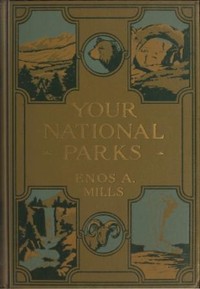
Your National Parks, with Detailed Information for Tourists Book Summary
Introduction to Your National Parks
\nWelcome to this summary of 'Your National Parks', a guide published in the late 19th century. This book offers a fascinating glimpse into the early days of America's national park system, providing practical advice and information for travelers eager to explore these protected natural areas. It reflects a growing national interest in preserving wild landscapes and making them accessible to the public, long before they became the world-famous destinations they are today.
\nWhat is 'Your National Parks' About?
\nThis book, written in the late 1800s, serves as an informative guide for tourists interested in visiting America's national parks. Its primary purpose was to provide detailed information to help travelers plan their journeys, understand park rules, appreciate the natural and historical significance of these areas, and foster a sense of respect for these protected spaces. It covers the establishment and management of parks like Yellowstone and General Grant (later becoming Sequoia and Kings Canyon), describes the unique features and attractions within them, and outlines the etiquette expected of visitors during that era.
\nKey Lessons from 'Your National Parks'
\nThe book 'Your National Parks' offers valuable insights into the origins of environmental preservation and tourism etiquette. Firstly, it emphasizes the importance of **respecting the natural environment and park regulations**. It stresses the need to stay on designated trails, not to disturb wildlife, and to camp only in established areas, reflecting an early understanding of the impact human visitors can have. For example, it might caution against collecting rocks or plants, explaining that these actions could harm the park's ecosystem and detract from the experience for others, urging visitors to be considerate stewards of these fragile lands.
\nSecondly, the book highlights the **educational value of visiting national parks**. It encourages travelers not just to observe the scenery but to learn about the geology, unique plant and animal life, and the history behind the park's creation and management. It positions the parks as places of discovery and learning, where visitors can gain a deeper appreciation for the natural world and the efforts taken to preserve it. The text often provides descriptions of specific features, like geysers or ancient trees, along with their scientific or cultural significance.
\nThirdly, 'Your National Parks' underscores the **role of tourism in supporting conservation**. While not explicitly stated in modern terms, the guide implies that responsible visitation and perhaps even spending money within the parks (buying guides, maps, or supplies) helps sustain these protected areas. It presents visiting as a privilege granted by society's collective decision to conserve these lands, suggesting that tourism should align with the purpose of preservation rather than exploitation. The detailed descriptions also served to popularize these areas, fostering a desire to protect them for future generations.
\nIs This Book Fit for Me?
\nThis book is particularly suitable for readers interested in:
\n- \n
- Historical Context: Those wanting to understand the history of the US national park system, its early development, and the motivations behind its creation (preservation, scientific study, public enjoyment). \n
- Early Tourism and Etiquette: Readers curious about how parks were managed and visited in the 19th century, including practical advice on planning trips, understanding park rules, and appropriate visitor behavior. \n
- Nature and Conservation Advocates: Individuals interested in the early conservation movement and the writings of figures like John Muir and the establishment of the National Park Service. \n
- Travelers Planning Historic Trips: Those planning visits to parks like Yellowstone or Sequoia and wanting to gain a sense of their historical atmosphere and significance before their trip. \n
- History of Travel Writing: Those exploring the genre of travel guides from the late 19th century. \n
Does It Still Matter Today?
\nYes, absolutely. The concerns and lessons from 'Your National Parks' remain highly relevant today. The fundamental issues of balancing visitor access with environmental protection, managing tourism impact, respecting park rules, and fostering appreciation for natural heritage are as critical now as they were over a century ago. The book provides a valuable historical baseline for understanding how these challenges have evolved and how park management philosophies have changed. While specific advice (like horseback requirements or certain campsite locations) is outdated, its core message about responsible visitation and the importance of these protected areas endures. Reading it offers a unique perspective on the origins of the park system and helps ground our modern experiences within a longer history.
\n| Reading on Gutenburg | Free reading |
| Get Paperback Version on Amazon | Buy a book |
| Suggest Book : This Land Is Your Land: An Ecological History of the United States Book | Get on Amazon |
Conclusion
\n'Your National Parks' offers more than just historical curiosity; it provides a window into the foundational principles of our national park system and the early values surrounding conservation and public access to nature. While its direct practical advice for modern tourists is limited, its insights into the purpose and management of parks, coupled with its evocative descriptions of these early wilderness areas, make it a valuable read. It deepens our appreciation for the places we visit today and reminds us of the ongoing responsibility to protect and enjoy them thoughtfully.
\n